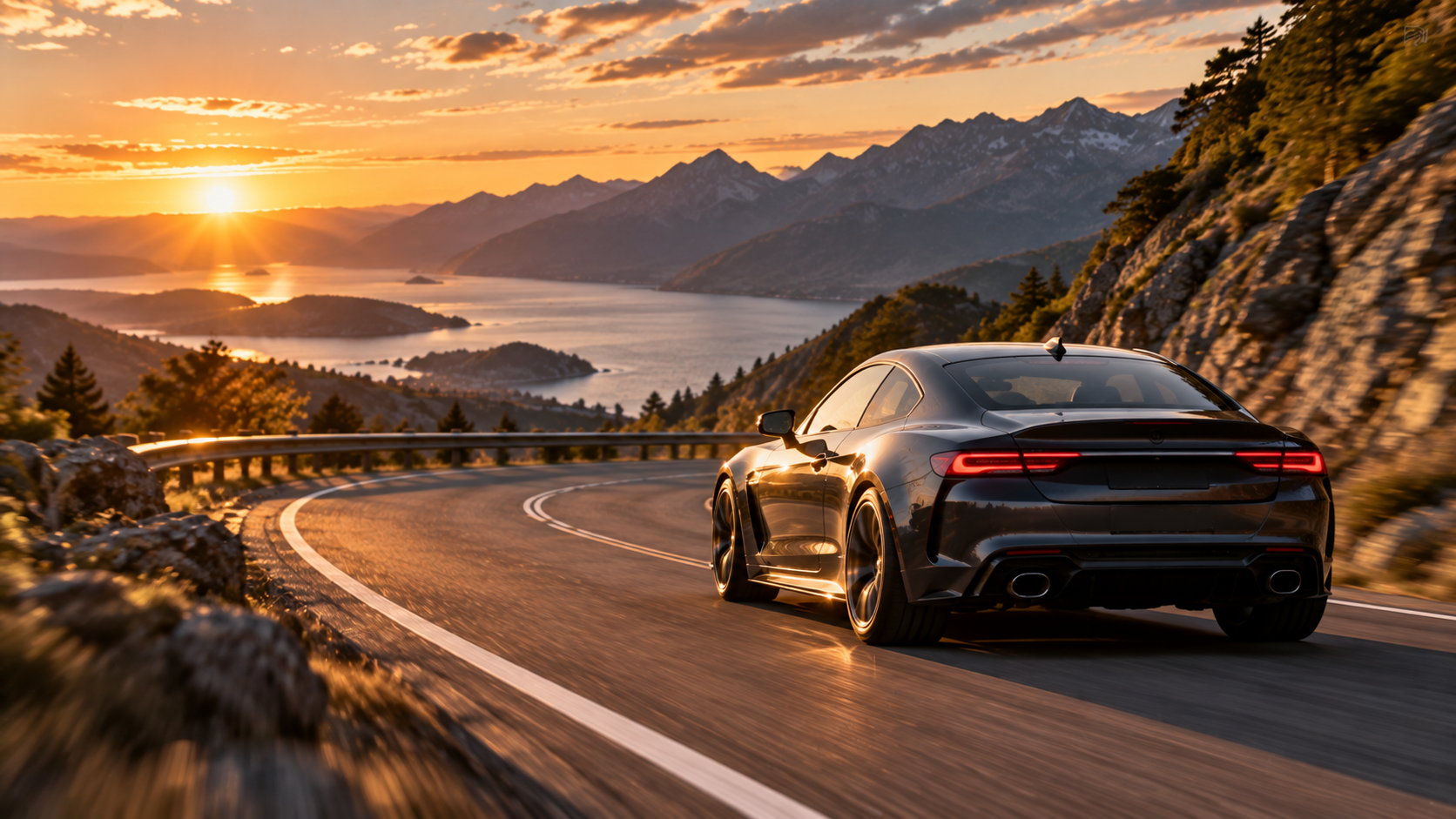
Two cars can have almost identical specifications and feel completely different from behind the wheel.
They might have similar horsepower, similar weight, similar acceleration and even similar dimensions. Yet one can feel alive the moment you turn the steering wheel, while the other feels strangely disconnected.
That difference is one of the most interesting parts of the driving experience.
Specifications tell us what a car can do. They do not always tell us what a car feels like while doing it.
Some of the most memorable cars are not necessarily the most powerful or the fastest. They are the cars that communicate clearly with the driver, respond naturally to inputs and create a sense of connection between the person and the machine.
So what makes a car feel better to drive than its specifications suggest?
Numbers Only Tell Part of the Story
Horsepower, torque, acceleration and top speed are easy to compare.
They are useful numbers, but they describe only a portion of the driving experience.
Imagine two cars producing 250 horsepower. One may feel exciting because its throttle response is immediate, its steering is precise and its chassis communicates what the tires are doing.
The other may be quicker in a straight line but feel less engaging because the steering is isolated, the throttle response is heavily filtered or the suspension does not communicate much information.
On paper, they look similar.
Behind the wheel, they can feel completely different.
1. Steering Feel Changes the Entire Experience
Steering is one of the primary ways a driver communicates with a car.
A steering wheel that responds naturally can make even an ordinary road more interesting.
The important part is not simply how quickly the car turns. It is how predictable the relationship between steering input and vehicle movement feels.
A good steering system allows the driver to understand what the front tires are doing. It can communicate whether the road surface is changing, whether the car is beginning to understeer or simply how much grip is available.
Modern steering systems can be extremely precise while still feeling somewhat artificial.
That is why steering feel cannot always be measured by specifications.
2. Weight Matters More Than Horsepower Sometimes
A lighter car can feel remarkably energetic without producing huge numbers.
Lower weight affects acceleration, braking, cornering and direction changes. More importantly, it can make the car feel easier to control.
When a vehicle changes direction quickly and naturally, the driver may perceive it as more responsive than a heavier car with significantly more power.
This is one reason lightweight sports cars have remained attractive to enthusiasts even as modern performance cars continue to become faster.
Speed can create excitement.
Lightness can create involvement.
3. Balance Creates Confidence
A car does not have to be perfectly neutral to be enjoyable, but its behavior should be predictable.
When the front and rear of the car work together naturally, the driver can begin to understand its personality.
You know how it will react when you brake before a corner. You know what happens when you add throttle on the exit. You can gradually explore the limits without constantly feeling surprised by the chassis.
That confidence can make a car feel faster and more capable than its specifications suggest.
It is not necessarily about maximum grip.
It is about understanding what the car is doing.
4. Throttle Response Is Part of Character
Engine output is important, but the way that power arrives can be just as important.
A car with modest horsepower and immediate throttle response can feel more engaging than a more powerful car that delivers its power in a heavily filtered way.
This becomes especially noticeable on winding roads.
You are not simply asking the engine for maximum power. You are making small adjustments constantly.
A little throttle can change the attitude of the car. Lifting the accelerator can alter the balance. A precise response makes those inputs feel meaningful.
The engine becomes part of the conversation between driver and car.
5. Gearboxes Change the Rhythm
The transmission can dramatically influence how a car feels.
A manual gearbox gives the driver direct responsibility for gear selection, clutch engagement and engine speed.
An automatic can create a different experience by allowing the driver to concentrate more on steering and positioning.
Neither approach automatically makes a car better to drive.
What matters is how naturally the transmission works with the engine and chassis.
A gearbox that selects the right gear at the right moment can make a modest engine feel energetic. A poorly matched transmission can make a powerful engine feel distant.
The rhythm between acceleration, shifting and braking is part of the car’s character.
6. Suspension Is About More Than Comfort
Suspension has an enormous influence on how a car communicates with its driver.
A suspension system has to control body movement while allowing the tires to maintain contact with the road.
Too soft, and the car may feel vague during rapid changes of direction.
Too stiff, and the vehicle can become tiring on imperfect roads.
The most satisfying setups often create a sense of control without making the car feel nervous.
This is especially important on normal roads, where the surface is rarely perfect.
A car that can absorb bumps while remaining composed can feel much more sophisticated than its specification sheet suggests.
7. Tires Can Transform a Car
Tires are one of the few parts of the car directly connected to the road.
Their compound, construction, size and sidewall characteristics can dramatically change how a vehicle behaves.
Two identical cars running different tires can feel surprisingly different.
One may feel sharp and immediate. Another may feel softer and more progressive.
Tire choice can influence steering response, braking, cornering grip and even ride quality.
That is why a car’s factory specification does not tell the complete story of its dynamic character.
8. Seating Position Changes Your Perception
The driver’s position inside the car also affects how connected the vehicle feels.
A good driving position makes it easier to understand the car’s movement.
You want the steering wheel, pedals and seat to work together naturally. You want to feel centered in the vehicle rather than simply sitting on top of it.
This may sound like a small detail, but it changes how much information the driver receives.
A car can have excellent engineering underneath, but if the driving position feels awkward, some of that connection can disappear.
This is also one reason why seat design and driving comfort matter far beyond long road trips.
9. Sound Can Make a Car Feel Faster
Sound does not change the actual performance of a car, but it changes the driver’s perception of the experience.
The sound of an engine rising through the rev range can provide another layer of feedback.
Mechanical noises, exhaust character, tire noise and even the sound of air moving around the vehicle can become part of the experience.
That does not mean louder is always better.
A quiet luxury sedan can create its own sense of occasion, while a lightweight sports car may communicate its character through mechanical sounds.
The important thing is that the sound matches the personality of the vehicle.
10. Response Matters More Than Absolute Performance
One of the reasons slower cars can be so enjoyable is that their performance is easier to access.
You can use more of the engine. You can explore the brakes. You can experience the steering. You can accelerate without immediately reaching speeds that demand enormous amounts of space.
This creates a different relationship with the road.
A car does not need to be extremely fast to make a drive memorable.
Sometimes the most enjoyable car is the one that allows the driver to interact with it constantly.
11. Character Cannot Be Reduced to a Spreadsheet
Perhaps the most difficult quality to measure is character.
Some cars simply have a personality.
You recognize it through the steering, the engine response, the seating position, the visibility, the sound and the way the chassis reacts to different roads.
That personality can come from engineering decisions that seem insignificant individually.
A particular steering ratio.
A certain pedal position.
A small amount of suspension movement.
A naturally aspirated engine that responds differently from a turbocharged one.
A manual gearbox with a satisfying shift action.
None of these features necessarily dominate a specification sheet.
Together, they can define the entire experience.
The Car and the Road Have to Match
A car that feels incredible on a mountain road may not be the ideal machine for crossing a continent.
A comfortable luxury sedan may be fantastic on the highway but less interesting on a narrow winding road.
An older lightweight sports car may feel wonderfully alive at moderate speeds but lack the refinement of a modern grand tourer.
This is why there is no single definition of the perfect driving car.
The road changes the equation.
The same car can feel completely different depending on whether you are driving through a city, cruising on a highway or climbing a mountain road.
As we explored in why some roads are more enjoyable than others, the environment itself becomes part of the driving experience.
Why Some Cars Stay in Your Memory
Years later, people rarely remember every specification of every car they have driven.
They remember how the car made them feel.
They remember the steering on a particular road.
They remember the sound of the engine at night.
They remember the way the car felt leaving a corner.
They remember the seating position, the visibility, the dashboard and sometimes even the smell of the interior.
That emotional memory is one reason certain cars become important to their owners.
It is also part of why people continue to love older cars, even when modern vehicles can outperform them in almost every measurable category.
Performance numbers can become outdated.
Character often does not.
The Best Driving Cars Do Not Always Have the Best Numbers
A specification sheet can tell you how powerful a car is, how quickly it accelerates and how much it weighs.
It cannot completely explain how the steering feels in your hands.
It cannot measure how naturally the chassis responds to a corner.
It cannot describe the feeling of a perfect gear change on an empty road.
And it cannot tell you whether you will remember the drive years later.
That is why some cars feel better to drive than their specifications suggest.
The difference is found in the details: weight, balance, steering, throttle response, suspension, tires, seating position, sound and the relationship between all of them.
Ultimately, a great driving car is not simply a collection of numbers.
It is a machine that makes the driver want to keep going.
And sometimes, that is the specification that matters most.