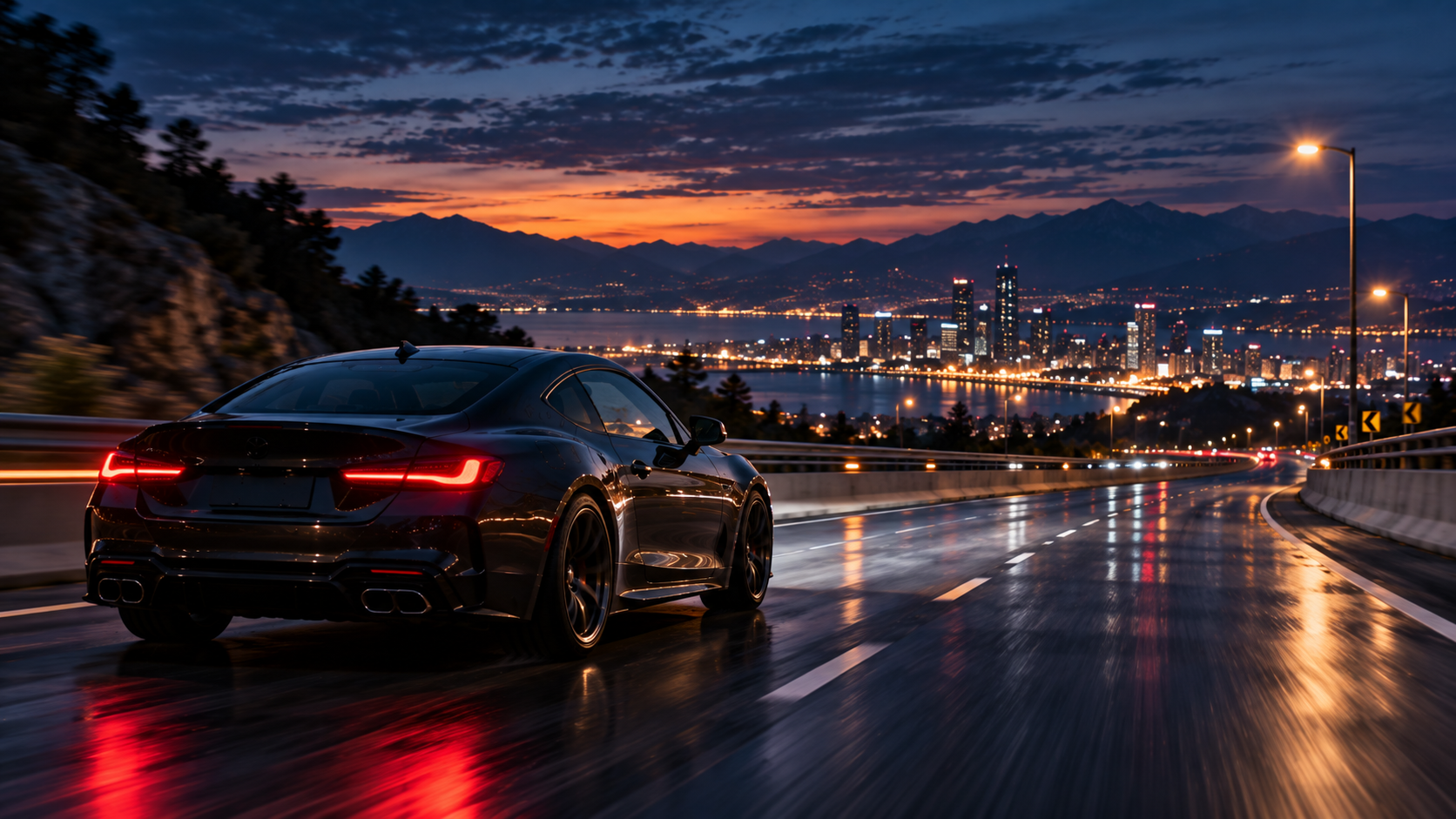
There are drives you remember because of the road.
There are drives you remember because of the car.
And then there are drives you remember because of the music.
A familiar song can instantly bring back a particular highway, a city at night or a road trip from years ago. Sometimes the music becomes so closely connected to the journey that remembering one automatically brings back the other.
That relationship between music and driving is one of the most interesting parts of the automotive experience.
Music Changes the Atmosphere Inside the Car
A car is already a unique environment.
You are surrounded by glass, metal, seats and controls while the outside world moves past you.
Add music and the atmosphere changes.
The same road can feel calm with a slow ambient track, energetic with an upbeat electronic song or nostalgic with a track you associate with an earlier period of your life.
The road has not changed.
The car has not changed.
But your perception of the journey can change dramatically.
1. Rhythm Can Become Part of the Drive
Driving naturally contains rhythm.
The engine rises and falls.
The road markings pass at regular intervals.
Traffic accelerates and slows.
Curves appear and disappear.
Music introduces another rhythm into that environment.
A steady beat can make a long highway feel almost hypnotic. A more energetic track can make a familiar road feel completely different.
This does not mean the driver should synchronize driving behavior to the music. The road always comes first.
But psychologically, rhythm can become part of how the journey feels.
2. Tempo Can Influence the Mood of a Journey
Different tempos create different atmospheres.
A slower track can complement an evening cruise through the city.
A steady electronic track can work naturally with an open highway.
A more energetic song can add excitement to an otherwise ordinary drive.
The interesting part is that the ideal tempo is not necessarily the fastest one.
Sometimes a repetitive and gradually evolving track works better because it does not demand constant attention.
That is one reason genres built around atmosphere and progression can work particularly well during long drives.
3. Progressive Music Fits the Long Road
Long drives have something in common with progressive music: both are about movement.
A good progressive track does not always reveal everything immediately.
It can begin with a simple rhythm, introduce another layer, gradually change the atmosphere and eventually arrive somewhere that feels different from where it started.
A long road can work in a similar way.
The scenery changes slowly.
The traffic changes.
The light changes.
The road opens and closes.
You continue moving while the environment evolves around you.
This is one reason Progressive Trance and the Driving Experience fits naturally into the AutoWalkthrough philosophy.
4. Familiar Songs Can Become Time Machines
Music is strongly connected to memory.
A song you have not heard for years can suddenly take you back to a particular place.
Maybe you remember driving home late at night.
Maybe you remember a road trip with friends.
Maybe you remember the car you owned at the time.
The music becomes attached to the experience.
Years later, hearing the same track can bring back details that you had almost forgotten.
The road may have disappeared from your daily life.
The car may have been sold years ago.
But the song remains.
5. Night Driving and Music Have a Natural Connection
Night changes the driving environment.
There are fewer visual details. The road becomes more focused. Streetlights, headlights and reflections replace much of the scenery visible during the day.
Music becomes more noticeable in that environment.
The cabin feels more isolated from the outside world.
A good track can make the car feel like a small private room moving through the darkness.
This is part of why night drives feel different.
The combination of darkness, movement and music creates an atmosphere that is difficult to reproduce anywhere else.
6. Music Can Make Familiar Roads Feel New
One of the most interesting effects of music is its ability to change your perception of a familiar environment.
Imagine driving the same road you have traveled hundreds of times.
During the day, you may barely notice it.
Then one evening, the weather changes, the sun disappears and a particular song starts playing.
Suddenly the same road feels cinematic.
Nothing physical has changed dramatically.
Your perspective has.
That is one of the reasons people create driving playlists instead of simply listening to random music.
7. A Driving Playlist Can Have Its Own Story
A good driving playlist does not necessarily need to contain the biggest songs.
It needs to create a journey.
The opening track might establish the atmosphere.
The next few tracks can gradually increase energy.
A slower section can provide space.
The final songs can create the feeling of arriving somewhere.
In this sense, a playlist can function almost like a soundtrack.
The music does not simply accompany the drive.
It helps define it.
8. The Car’s Sound Still Matters
Music does not exist alone inside a car.
There is also the mechanical soundtrack.
The engine, exhaust, tires and wind all contribute to the environment.
In a quiet luxury car, music can dominate the cabin.
In a sports car, the engine may become part of the soundtrack itself.
That contrast can be fascinating.
Sometimes the best moments are created when the music becomes quieter and the mechanical sounds become more noticeable.
Then the balance changes again as the road opens and the music returns.
9. Sound Quality Changes the Experience
The quality of a car’s audio system can influence how enjoyable music feels during a long drive.
Clarity matters.
So does balance.
A system that produces overwhelming bass may sound impressive for a short period but become tiring over several hours.
A balanced system can allow vocals, percussion, synthesizers and subtle atmospheric details to remain distinct.
This becomes especially important with electronic and progressive music, where small changes in texture can contribute significantly to the overall experience.
10. Silence Can Be Part of the Playlist
Sometimes the best musical moment is when the music stops.
A long drive can benefit from periods of silence.
You hear the tires against the road.
You hear the engine.
You hear wind moving around the vehicle.
You notice the weather outside.
After several minutes of silence, returning to music can feel surprisingly powerful.
The contrast makes the music feel fresh again.
11. Different Roads Need Different Soundtracks
There is no universal driving playlist.
A coastal road at sunset might call for something completely different from a highway crossing the desert.
A mountain road can create a different atmosphere from an empty urban expressway at midnight.
The same applies to the driver.
Your mood matters.
Your destination matters.
The weather matters.
Even the car matters.
Music becomes another variable in the experience.
12. Music Can Turn a Commute Into a Journey
Not every drive is a road trip.
Most people spend a significant amount of time driving ordinary routes.
The commute to work.
The trip to the supermarket.
The drive home after a long day.
Music can make these ordinary journeys feel more intentional.
It gives the drive a beginning and an end.
Instead of simply moving from one location to another, the journey can become a small period of personal space.
This is one reason people sometimes describe driving as therapeutic or relaxing, even when the road itself is completely ordinary.
13. The Best Driving Music Does Not Always Demand Attention
Driving requires concentration.
Traffic, pedestrians, road signs, weather and other vehicles all demand attention.
For that reason, music that constantly demands your focus may not be ideal for every driving situation.
Atmospheric music can work differently.
It can provide energy and emotion without requiring the listener to analyze every second of the track.
The road remains the primary focus.
The music creates the environment around it.
14. Music Can Influence How We Remember Cars
Cars and songs often become connected in memory.
You might remember a particular vehicle because of the music you always played inside it.
A song can become permanently associated with a certain car.
Years later, hearing that track can make you remember the interior, the steering wheel, the dashboard lights and even the feeling of sitting in that driver’s seat.
This is one of the reasons automotive memories can be so powerful.
The car is only one part of the memory.
The road, the people, the weather and the soundtrack all become connected.
15. The Right Song Can Change the Meaning of a Drive
Sometimes a drive begins without any particular purpose.
You simply get in the car and leave.
Then a song comes on that fits the moment perfectly.
The road is open.
The light is changing.
The traffic is moving smoothly.
For a few minutes, everything feels connected.
These moments are difficult to plan.
They happen naturally.
And they are often the moments people remember most.
Music Is Part of the Driving Environment
Driving is usually described in terms of machines and roads.
Engine performance.
Handling.
Comfort.
Fuel economy.
Technology.
But the experience inside the car is also shaped by sound.
The music playing through the speakers becomes part of the environment surrounding the driver.
It can change the atmosphere, influence the mood and become permanently connected to memories of the road.
That makes music more than background entertainment.
It becomes part of the journey.
The Road, the Car and the Soundtrack
The most memorable drives often contain several elements at once.
A car that feels right.
A road that creates a sense of movement.
Weather and light that change the atmosphere.
And music that somehow fits the moment.
When those elements come together, driving becomes more than transportation.
It becomes an experience.
That is ultimately why music makes driving feel different.
The road provides the movement.
The car provides the connection.
And the music gives the journey its soundtrack.
Sometimes, years later, you may not remember exactly where you were going.
But you will remember the song.
And for a moment, you will remember the road too.