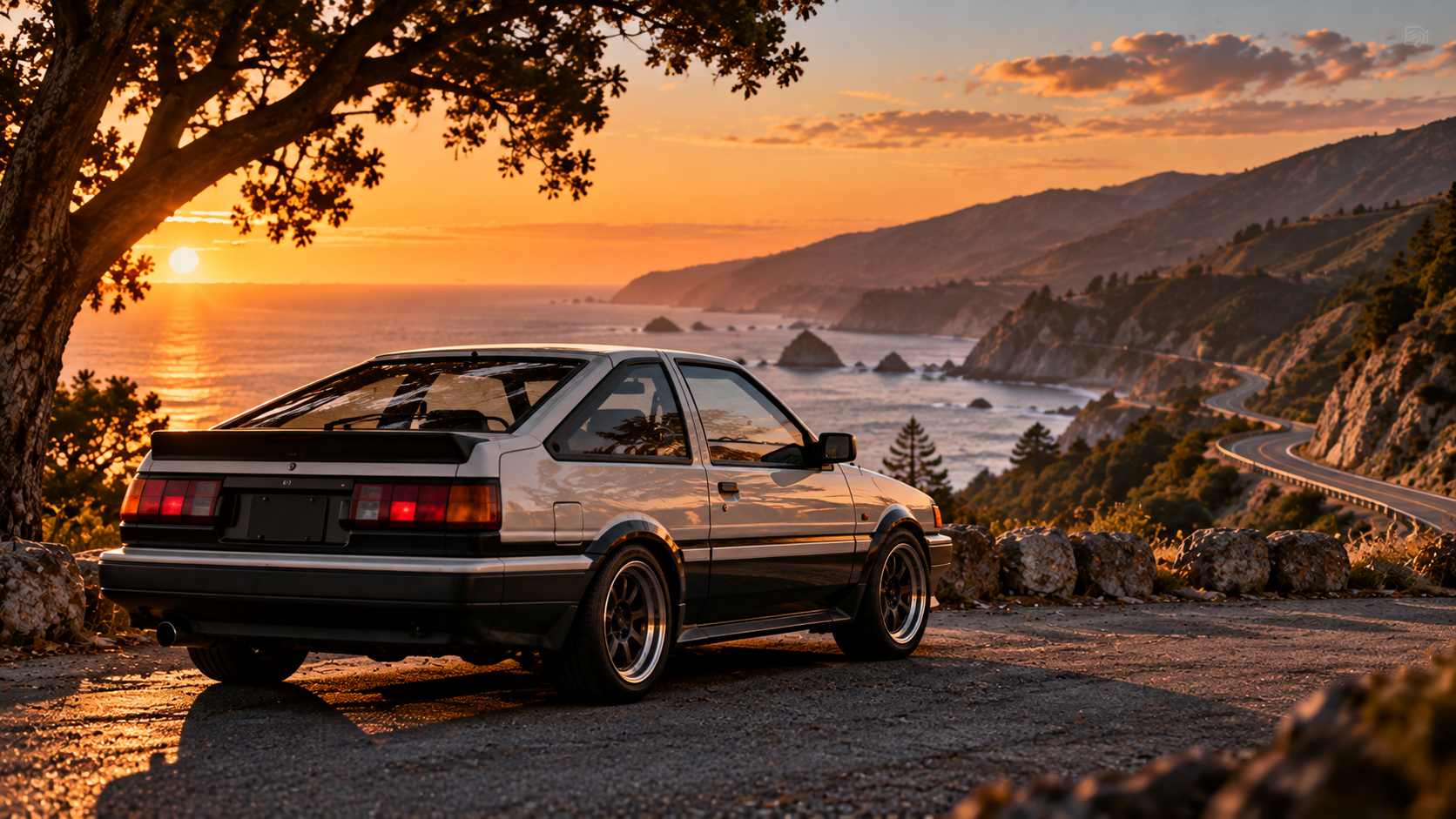
Modern cars are faster, safer, quieter and more technologically advanced than the cars that came before them.
Yet people still turn their heads when an old car drives past.
Some enthusiasts spend years restoring cars that are decades old. Others keep vehicles that are objectively less practical simply because they cannot imagine letting them go.
Why?
The answer is not always performance.
Sometimes it is memory.
Sometimes it is design.
Sometimes it is the sound, the mechanical feel or the simple fact that an older car feels different from everything currently sitting in a showroom.
Three Reasons Older Cars Still Appeal to Drivers
Consider a classic sports coupe, a simple rear-wheel-drive sedan, and an older off-road vehicle. Each can attract a different kind of enthusiast, and the reasons are not always related to speed or collector value.
A classic sports coupe may appeal because of its low seating position, clear dashboard layout, and direct connection between steering inputs and the road. An older sedan may be valued for its straightforward controls, familiar mechanical layout, and the memories associated with daily use. An older off-road vehicle may attract owners who appreciate its rugged design, repairability, and history of practical use.
These examples also reveal an important trade-off. Older vehicles can offer distinctive driving experiences and simpler controls, but they may lack modern crash protection, driver-assistance systems, fuel efficiency, and emissions technology. Parts availability and maintenance costs can also vary significantly by model and condition.
The appeal of an older car is therefore not that it is automatically better than a modern vehicle. It is that it offers a different combination of character, ownership experience, and historical significance.
Older Cars Tell a Different Story
Every car comes from a particular moment in automotive history.
The materials, technology, engineering priorities and design language reflect the period in which it was created.
An older car can therefore feel like a time capsule.
Its dashboard, controls, seats and even the way its doors close can remind someone of another era.
That connection is difficult to reproduce with a modern digital screen.
1. Design Has a Stronger Sense of Identity
One reason older cars remain attractive is that many of them have distinctive proportions.
Long hoods.
Thin pillars.
Simple grilles.
Round headlights.
Angular body lines.
Chrome details.
Some modern cars are beautifully designed, but the increasing importance of aerodynamics, safety requirements and packaging can influence their shapes in ways that make different vehicles feel more similar.
An older car can sometimes be recognized from a distance.
Its silhouette becomes its identity.
2. The Interior Feels Different
Older interiors often contain physical controls for functions that are now hidden behind screens.
Buttons, switches, knobs and analog gauges create a different relationship between driver and machine.
You can often operate something simply by reaching for it.
There is something satisfying about that physical interaction.
It makes the car feel mechanical rather than purely digital.
This does not mean older interiors are objectively better.
Modern interiors offer enormous advantages in connectivity, safety and convenience.
The difference is the experience.
3. You Can Feel More of the Machinery
Many older cars provide a stronger mechanical connection between the driver and the vehicle.
You may feel the engine through the chassis.
You may hear more road noise.
The steering may communicate more directly.
A manual transmission can make every gear change a physical decision.
These characteristics are not necessarily more efficient or comfortable.
But they can make driving feel more interactive.
The driver becomes more involved in the process of moving the car.
4. Manual Transmissions Create a Different Relationship
Manual transmissions deserve special mention.
Modern automatic transmissions can shift faster, improve efficiency and make traffic considerably easier.
Yet enthusiasts continue to seek manual cars because the transmission creates another layer of interaction.
Clutch.
Gear.
Throttle.
Timing.
Every shift becomes part of the experience.
That interaction can make even a relatively slow car enjoyable on the right road.
It is one example of how driving enjoyment cannot always be measured by acceleration figures.
5. Older Cars Carry Memories
Perhaps the strongest reason people love older cars is personal memory.
A particular car may remind someone of childhood.
It may have been the vehicle their parents drove.
It may have been their first car.
It may remind them of a first road trip, a first job or a period of life that can no longer be recreated.
The car becomes connected to the memory.
That emotional connection is not something a specification sheet can explain.
6. Cars Become Part of Personal History
People often remember where they were when they owned a particular car.
The streets they drove.
The music they listened to.
The people who sat in the passenger seat.
The places they visited.
Over time, the vehicle becomes part of a larger personal story.
This is one reason automotive culture is about much more than ownership.
As Why Automotive Culture Is About More Than Cars explores, cars can connect people through memories, communities, design and shared experiences.
7. Older Cars Encourage Mechanical Curiosity
A modern vehicle can be incredibly complex.
Electronic control units, sensors, driver-assistance systems and software now influence almost every part of the driving experience.
Older cars can be different.
Some mechanical systems are easier to understand visually.
Open the hood and you may be able to identify many of the major components immediately.
This can encourage owners to learn basic mechanical skills.
Changing a component, diagnosing a problem or restoring a neglected part of the vehicle can become part of the hobby itself.
8. Restoration Becomes Part of the Experience
Restoring an old car is rarely just about returning it to perfect condition.
The process itself can become meaningful.
Finding parts.
Cleaning old components.
Repairing something that has been neglected for years.
Watching the vehicle slowly return to the road.
Each stage creates another connection between owner and machine.
When the car finally drives again, the owner has more than a vehicle.
They have a story attached to it.
9. Imperfections Can Become Character
Older cars often have imperfections that would be considered unacceptable in a modern vehicle.
Maybe the paint is not perfect.
Maybe the interior has some wear.
Maybe the engine makes a sound that would worry a modern-car owner.
Those imperfections can become part of the vehicle’s personality.
Of course, mechanical problems should still be repaired when necessary.
But cosmetic age and mechanical condition are not the same thing.
A car can show its age and still be deeply loved.
10. Older Cars Sound Different
Engine sound is another major part of automotive memory.
Different engines produce different mechanical signatures.
Inline-fours.
Six-cylinder engines.
V8s.
Turbocharged engines.
Naturally aspirated engines.
Even exhaust systems can completely change the character of a vehicle.
For enthusiasts, that sound can be as recognizable as the shape of the car itself.
It becomes part of the identity.
11. Older Cars Can Make Slow Driving Interesting
One of the interesting things about older cars is that they can make relatively modest speeds enjoyable.
A lightweight car with direct controls does not necessarily need extreme power to create a sense of involvement.
The road itself becomes more important.
A winding road at an appropriate speed can provide plenty of engagement without requiring enormous acceleration.
This connects with the broader idea that what makes a car feel special is not always found in its performance numbers.
12. Older Cars Create Communities
Car culture often grows around shared interests.
Owners of the same model may exchange parts, advice, restoration techniques and stories.
Local meets create another opportunity for people to see cars they would never encounter during an ordinary commute.
Online communities have expanded this even further.
A person restoring a thirty-year-old car in one country can find information from another enthusiast thousands of miles away.
The car becomes a reason for people to connect.
13. The Same Car Can Mean Different Things to Different People
An older sports car might represent performance to one person.
To another, it might represent childhood.
A small hatchback might remind someone of their first job.
A sedan might remind someone of family road trips.
A pickup might represent a particular period in automotive history.
There is no single correct interpretation.
Cars become meaningful through the experiences people attach to them.
14. Older Cars Feel Less Disposable
Modern products are often replaced quickly.
New technology arrives every year.
Designs change.
Features improve.
Older cars create a different relationship with ownership.
If someone has kept the same vehicle for fifteen or twenty years, it can begin to feel less like a product and more like part of the household.
The car has survived multiple chapters of the owner’s life.
That longevity creates emotional value.
15. Nostalgia Is Powerful
Nostalgia does not necessarily mean believing the past was better.
It means recognizing that certain objects can trigger memories and emotions connected to another period of life.
Cars are particularly powerful nostalgia machines because they combine multiple senses.
You can see the dashboard.
You can hear the engine.
You can smell the interior.
You can physically sit where you once sat years ago.
That combination can bring back memories with surprising intensity.
Why New Cars Can Still Be Better
None of this means modern cars are inferior.
Modern vehicles generally offer significant improvements in areas such as safety, emissions, efficiency, connectivity and convenience.
Advanced driver-assistance systems can reduce workload in appropriate situations. Modern suspension systems can provide remarkable comfort. Contemporary engines can produce impressive performance while using less fuel than many older designs.
The appeal of older cars is therefore not necessarily about technical superiority.
It is about character and connection.
The Trade-Off Is Part of the Charm
Owning an older car can require more patience.
Parts may be harder to find.
Maintenance can require more attention.
Fuel economy may not match a modern vehicle.
Safety technology may be limited compared with today’s standards.
Those realities are important.
But for enthusiasts, the additional effort can become part of the hobby.
You are not simply using the car.
You are maintaining a piece of automotive history.
Older Cars and the Road Trip
An older car can also change the character of a road trip.
The journey may become slower.
You may stop more often.
You may pay more attention to temperature gauges, fuel levels or unusual noises.
That can sound inconvenient.
But it can also make the driver more aware of the machine.
Every kilometer feels slightly more deliberate.
Every successful arrival becomes part of the story.
The Car You Remember Is Rarely Just a Car
Ask someone about a car they loved years ago and they may start talking about everything except the specifications.
They remember the color.
The sound.
The road.
The people.
The music.
The places they went.
That is the real power of automotive nostalgia.
The machine becomes a container for memories.
Why Some Cars Stay With Us
Technology changes quickly.
Cars become more capable every generation.
Yet certain older vehicles remain meaningful because their value is no longer purely technical.
They represent a design era.
A driving philosophy.
A personal memory.
A community.
Or simply a time when life felt different.
That is why an old car can sit quietly in a garage for years and still matter deeply to its owner.
The Best Cars Are Sometimes the Ones With a Story
A car does not need to be rare to become special.
It does not need a huge engine.
It does not need to be worth a fortune.
Sometimes the most important car is simply the one that was there.
There for the first long drive.
There for the late-night return home.
There for the road trip.
There for a chapter of life that cannot be repeated.
That is why people continue to love older cars.
Not because they are always better machines.
But because sometimes a car becomes more than a machine.
It becomes part of the story.