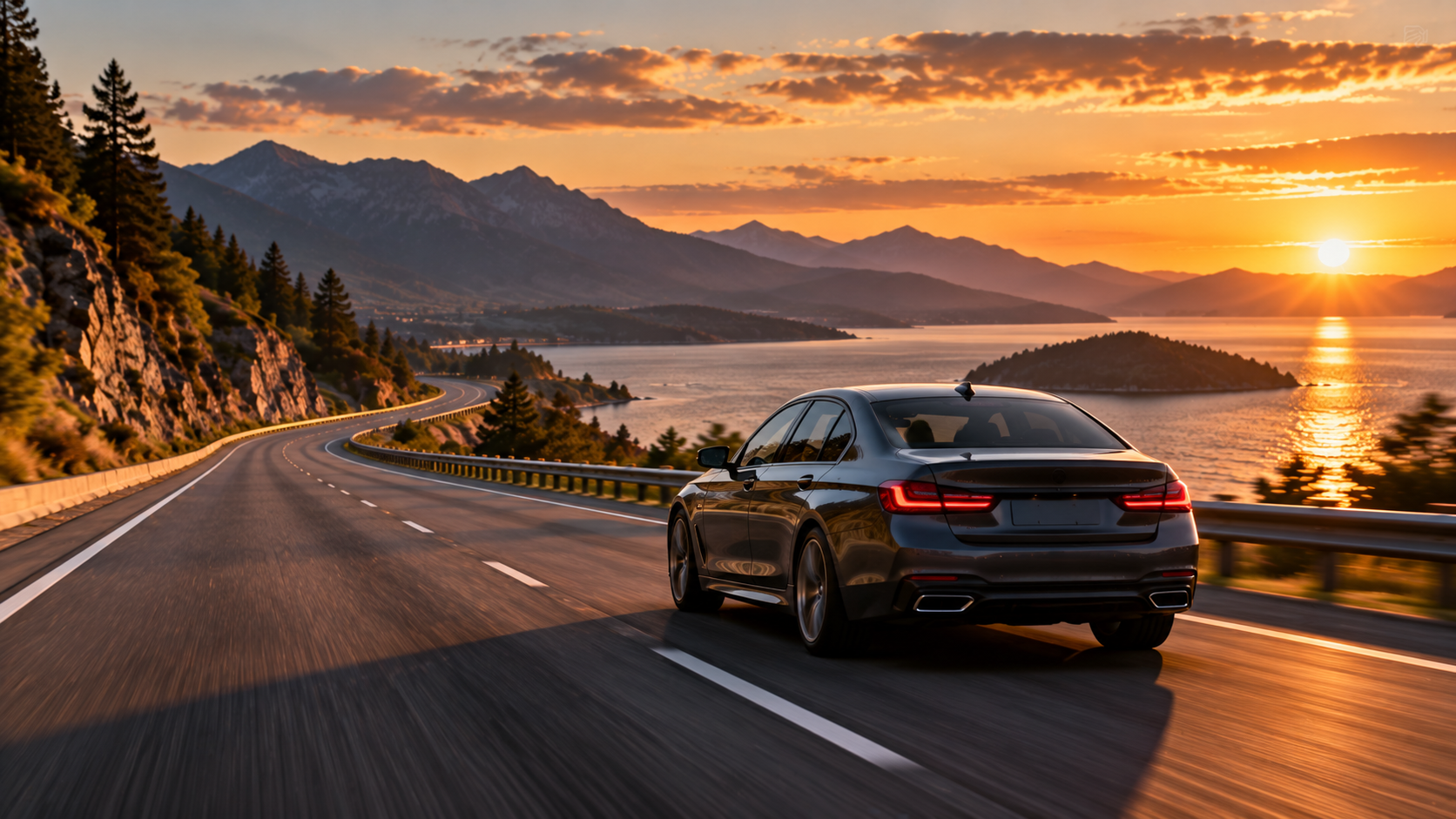
A car can feel impressive around town and completely different after three hours on the highway.
At low speeds, acceleration and styling may dominate the experience.
On a long highway journey, different qualities begin to matter.
The suspension.
The seats.
The noise inside the cabin.
The stability of the car at speed.
The way the steering responds.
Even small details such as storage, climate control and visibility become more noticeable.
Highway comfort is therefore about much more than luxury.
It is about how naturally the entire car works with the driver.
Highway Driving Reveals a Different Side of a Car
A short test drive can tell you a lot about a vehicle.
But it cannot always reveal how the car behaves after several hours.
Highway driving creates a relatively repetitive environment.
The vehicle maintains speed for long periods. The road stretches into the distance. The driver remains seated in almost the same position.
This makes small characteristics much easier to notice.
A little vibration becomes obvious.
Cabin noise becomes tiring.
An uncomfortable seat becomes impossible to ignore.
This is why the best highway cars are often defined by qualities that do not look particularly exciting on a specification sheet.
1. Ride Quality Is One of the Biggest Factors
The suspension has a major influence on highway comfort.
A well-balanced suspension should absorb road imperfections without making the car feel disconnected or unstable.
Too much stiffness can make rough pavement tiring.
Too much softness can create excessive movement over undulating roads.
The ideal balance depends on the vehicle and the road.
A luxury sedan may prioritize isolation and smoothness.
A sports sedan may sacrifice some comfort for sharper responses.
An SUV may prioritize a combination of ride quality, ground clearance and practicality.
There is no universal answer.
What matters is how well the suspension matches the type of driving you actually do.
2. Highway Stability Matters More Than Acceleration
A car does not need enormous power to feel good on the highway.
What matters more is how confidently it maintains its path.
A stable vehicle requires fewer steering corrections and feels predictable when passing trucks, encountering crosswinds or traveling across uneven pavement.
This creates a sense of calm.
The driver does not need to constantly correct the vehicle.
It simply tracks the road.
That quiet confidence is one of the characteristics that makes long-distance driving enjoyable.
3. Steering Should Feel Natural
Highway steering does not necessarily need to be extremely quick.
In fact, overly sensitive steering can make long straight sections more tiring because the driver is constantly making small corrections.
A comfortable highway car usually has steering that feels predictable.
Small inputs should produce controlled responses.
The steering should also communicate enough information for the driver to understand what the car is doing without demanding constant attention.
The best steering setup is often the one that becomes almost invisible during a long drive.
4. Cabin Noise Changes Everything
Noise is one of the easiest characteristics to underestimate during a short drive.
After several hours, it becomes much more important.
Road noise.
Wind noise.
Engine noise.
Tire noise.
All of them contribute to the overall environment inside the car.
A quiet cabin allows conversation and music at lower volumes and can make the journey feel more relaxed.
This does not mean every car should be silent.
Some enthusiasts genuinely enjoy hearing the engine.
The difference is whether the sound feels intentional and enjoyable or simply tiring.
5. Seats Need to Work for Hours
The driver’s seat is arguably one of the most important parts of a highway car.
A seat that feels good for twenty minutes may not feel good after four hours.
Useful characteristics can include:
- Good lumbar support
- Appropriate cushion length
- Useful seat adjustment
- Stable lateral support
- Comfortable cushioning
- A suitable driving position
Seat comfort is highly personal.
What works for one driver may not work for another.
That is why actually spending time in the seat matters.
As we explored in 7 Things to Look for in a Car Seat for Long Drives, long-distance comfort depends on support and ergonomics rather than softness alone.
6. The Driving Position Should Feel Natural
A comfortable car allows the driver to establish a natural relationship between the seat, steering wheel and pedals.
You should not need to stretch toward the steering wheel.
You should not feel cramped against the dashboard.
Your mirrors should be easy to position.
Your controls should be accessible without excessive movement.
The driving position is the foundation of the entire highway experience.
Get it right and many other things become easier.
7. Good Visibility Reduces Effort
Visibility is another quality that becomes more valuable over time.
A driver needs to monitor the road ahead, mirrors, surrounding traffic and changing conditions continuously.
Good visibility reduces the amount of physical and mental effort required to understand what is happening around the vehicle.
This can be particularly valuable during long journeys.
Large mirrors, sensible pillar design and a clear windshield can matter more than some interior features that receive much more attention in advertising.
8. Climate Control Should Be Predictable
Temperature can have a surprisingly large effect on comfort.
A good climate-control system should allow the driver and passengers to maintain a comfortable environment without constant adjustment.
Air distribution also matters.
If one passenger is freezing while another is uncomfortable from excessive heat, the journey becomes harder for everyone.
Dual-zone or multi-zone climate systems can help, but even a simple system can work well if the cabin is properly designed.
9. Highway Visibility at Night Matters
Long-distance journeys do not always happen during daylight.
Headlight performance, windshield cleanliness and instrument visibility become increasingly important after sunset.
A well-designed lighting system can make the road easier to read while reducing unnecessary visual strain.
Night driving also changes the atmosphere of the journey.
As Why Night Drives Feel Different explores, darkness can transform even a familiar road.
But the priority should always remain safe visibility rather than atmosphere.
10. Adaptive Cruise Control Can Reduce Workload
Modern driver-assistance systems can make highway driving easier in appropriate conditions.
Adaptive cruise control can help maintain a selected speed and following distance, depending on the vehicle and system.
Lane-centering or lane-keeping assistance can provide additional support on compatible roads.
These systems can reduce workload.
They should not be treated as autonomous driving.
The driver remains responsible for monitoring the road and responding when necessary.
The best technology is technology that helps without demanding constant attention.
11. The Infotainment System Should Be Easy to Understand
A complicated infotainment system can become frustrating during a long journey.
Drivers need simple access to essential functions such as navigation, audio and climate controls.
Physical controls can still be useful for frequently used functions because they can often be operated by feel.
Large screens are impressive, but screen size alone does not determine usability.
The best interface is the one that lets you accomplish basic tasks without unnecessary interaction.
12. Storage Matters More Than You Think
Long-distance driving usually means carrying more things.
Water bottles.
Phones.
Sunglasses.
Charging cables.
Travel documents.
Small personal items.
Good storage keeps these objects from becoming clutter.
A well-designed center console, door pockets and cupholders can make a difference over several hours.
It is a small detail that becomes more valuable the longer the journey lasts.
13. Fuel Range Creates Freedom
Range affects the psychological experience of highway driving.
A vehicle with enough range for long sections between stops gives the driver more flexibility.
This does not mean maximum range is always necessary.
It depends on the road network, availability of fuel or charging and the driver’s habits.
For EVs, charging infrastructure becomes part of the journey.
For conventional vehicles, fuel availability may be less of a concern but still matters on remote routes.
The important thing is knowing the vehicle’s realistic range rather than relying solely on theoretical numbers.
14. Practicality Becomes More Important With Distance
A car can feel wonderful with two people and almost no luggage.
Add four passengers and several bags and the equation changes.
Trunk space, rear-seat room and cabin storage become increasingly important.
This is why a road-trip car should be evaluated according to the trips it will actually take.
The perfect highway vehicle for one person may be completely wrong for a family.
15. The Car Should Match the Road
There is no single ideal highway car.
A large luxury sedan may be excellent for long interstate journeys.
A compact hatchback may be easier in dense cities.
An SUV may provide a useful balance of space and comfort.
A sports car may turn a scenic highway into the highlight of the trip.
The important question is not which vehicle is universally best.
It is which characteristics match the journey.
16. Tire Choice Can Change the Character of a Car
Tires have a major influence on ride quality, road noise, grip and steering feel.
Two otherwise identical cars can feel noticeably different because of their tire design and specification.
Performance-oriented tires may prioritize grip and steering response.
Touring-oriented tires may prioritize comfort and lower road noise.
There are trade-offs.
The right choice depends on the vehicle, climate, roads and intended use.
17. Wheels and Tire Sidewalls Matter
Wheel size can also influence comfort.
Larger wheels with lower-profile tires can create sharper steering responses and a more aggressive appearance.
But less tire sidewall can also mean less cushioning over rough pavement.
For drivers who spend most of their time on long highway journeys, ride comfort may be more valuable than the visual impact of an oversized wheel.
This is another example of how appearance and driving experience do not always point in the same direction.
18. The Car Should Feel Relaxed at Cruising Speed
A comfortable highway car does not need to feel exciting every second.
In fact, the opposite can be true.
The ideal long-distance vehicle can settle into a rhythm and remain composed for hours.
The engine does not need to work hard.
The suspension does not constantly react to every road imperfection.
The steering does not demand constant corrections.
The cabin remains comfortable.
The car simply moves forward.
That sense of effortlessness is one of the defining characteristics of highway comfort.
Why the Fastest Car Isn’t Necessarily the Best Highway Car
Highway driving rarely requires a huge amount of performance.
Once a vehicle has enough power for safe merging and passing within legal limits, additional acceleration may have diminishing practical value.
Other characteristics begin to matter more.
Stability.
Comfort.
Noise.
Visibility.
Seat support.
Range.
That is why the best cars for long drives aren’t always the fastest.
The Importance of Small Details
Highway comfort is built from many small details.
A steering wheel that feels good in your hands.
A seat adjustment that gives you exactly the right position.
A cupholder that actually fits your bottle.
A cabin that remains quiet over coarse pavement.
A suspension that absorbs expansion joints without unnecessary movement.
None of these features sounds revolutionary.
Together, they can completely change the character of a long journey.
Comfort and Character Can Coexist
Comfort does not mean a car has to be boring.
A vehicle can be quiet and composed while still having steering feel, engine character and a sense of identity.
Some of the most memorable cars combine both qualities.
They can cross hundreds of miles without exhausting the driver and still make a winding section of road feel special.
That balance is difficult to achieve.
It is also one of the things that makes certain cars memorable.
The Highway Is Where a Car’s Personality Becomes Clear
A car can tell you what it is during a short drive.
A long highway journey tells you what it is like to live with.
You discover whether the seats really work.
You discover whether the cabin is actually quiet.
You discover how the suspension behaves after hours of driving.
You discover whether the controls remain intuitive.
And you discover whether you still enjoy being behind the wheel when the novelty has disappeared.
The Best Highway Cars Reduce Effort
The defining quality of a comfortable highway car is not necessarily luxury.
It is the ability to reduce unnecessary effort.
The car should remain stable.
The seat should support you.
The cabin should remain comfortable.
The controls should make sense.
The vehicle should have enough range for the route.
Everything should work together without constantly demanding your attention.
Then the Road Becomes the Focus
When a car gets highway comfort right, something interesting happens.
You stop thinking about the vehicle.
You stop thinking about the seat.
You stop thinking about the suspension.
You simply drive.
The road stretches ahead.
The scenery changes.
The music continues.
And the journey becomes what it was supposed to be.
Not a test of endurance.
Not a race to the destination.
Just the experience of driving.