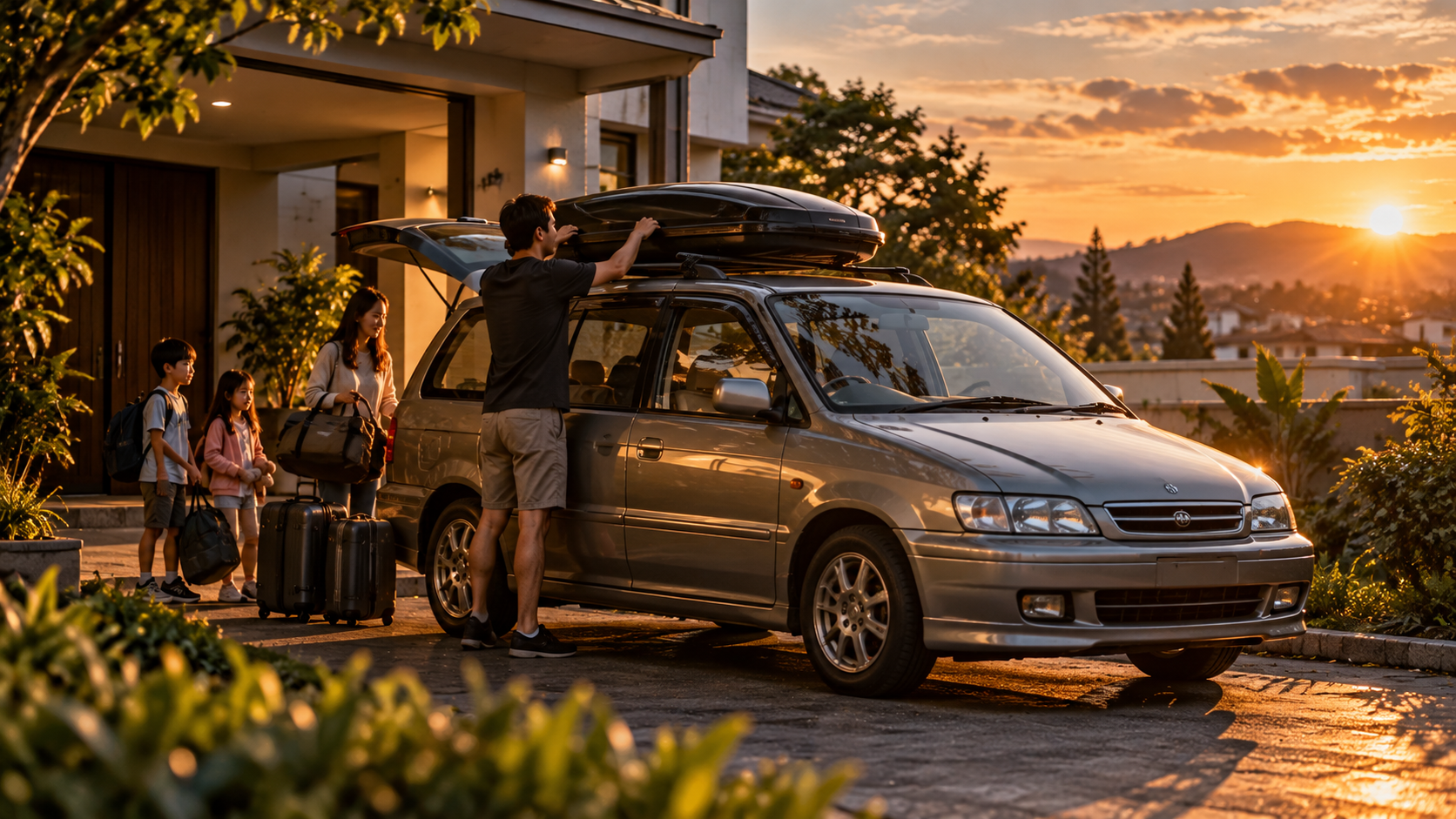
Some cars are remembered for their speed. Others are admired for their design, their engineering, or the sound of their engines. But there is another kind of car that matters for a completely different reason: the one that becomes part of the family.
It might be an ordinary sedan, an aging MPV, a small hatchback, or an SUV that has spent years parked in the same driveway. It may never appear in a magazine or attract attention at a car meet. Yet everyone in the household knows it, recognizes its sounds, and remembers the places it has been.
For one person, it is the car that brought their children home from the hospital. For another, it is the vehicle that carried the family through countless holidays, school runs, grocery trips, and late-night journeys home.
Eventually, the car becomes more than a machine. It becomes part of the family’s history.
A Family Car Witnesses Everyday Life
The most meaningful memories do not always happen during extraordinary journeys. Often, they grow out of ordinary routines repeated over many years.
Think about the school run that happened every weekday morning, the familiar route to a grandparent’s house, or the drive to buy food on a rainy evening. These journeys rarely feel important at the time. They are simply part of life.
But years later, the details can become surprisingly vivid. Someone remembers sitting in the back seat and looking through the window. Another person remembers falling asleep during a long journey while the radio played quietly in the background. A parent remembers checking the mirrors to make sure everyone was comfortable before pulling away.
The car was present through all of it.
Unlike a photograph taken for a special occasion, a family car participates in life as it happens. It carries people through changing seasons, different homes, new jobs, growing children, and countless small moments that might otherwise be forgotten.
That is how an ordinary vehicle can acquire extraordinary meaning without ever becoming a collectible.
The Interior Becomes a Familiar Place
Spend enough years inside the same car and its interior becomes almost as familiar as a room in your home.
You know where the sunlight falls in the afternoon. You recognize the sound of the air conditioning starting, the feel of the steering wheel, and the small vibration that appears when the engine is cold. You know which door needs to be closed a little more firmly and which storage compartment holds the things nobody remembers putting there.
Family members develop their own associations with these details. One person always sits in the front passenger seat. Someone else claims a particular place in the back. The youngest passenger might remember the car primarily as the place where long journeys meant snacks, music, and occasional arguments over the temperature.
These habits become part of the vehicle’s identity.
When a family eventually replaces the car, a newer model may offer more space, better technology, and a quieter ride. It can be a sensible improvement in almost every practical respect. Yet the new interior initially feels unfamiliar because it has not accumulated the same history.
Comfort is not always about the quality of the materials. Sometimes, it is about knowing a place so well that you no longer have to think about it.
Road Trips Turn Cars Into Memory Keepers
Long journeys create a special relationship between people and the vehicles carrying them. Hours spent together on the road give families time that everyday schedules rarely provide.
There are conversations that begin without a plan, roadside stops that become family jokes, unexpected detours, and the familiar question of how much farther remains. A journey might include beautiful scenery, heavy rain, traffic, or a stop at a small restaurant nobody had planned to visit.
Not every trip goes smoothly. In fact, the difficult parts can become some of the best stories later.
The car holds these experiences together. Its seats become the setting for conversations, its windows frame unfamiliar landscapes, and its dashboard becomes a familiar view throughout the journey.
Over time, certain roads can bring back memories of a specific vehicle. A mountain pass might remind someone of the family MPV they travelled in as a child. A coastal highway might bring back the sound of an old engine working steadily uphill.
If you enjoy the experience of the journey as much as reaching the destination, our article The Art of the Long Drive explores why time on the road can become meaningful in its own right.
Sometimes, remembering a road trip means remembering the car that made the trip possible.
Children Remember Cars Differently From Adults
Adults often evaluate family cars through practical considerations: reliability, running costs, safety, fuel economy, and available space. These things matter because adults are responsible for keeping the household moving.
Children tend to build a different relationship with the same vehicle.
They may remember the view from the back seat, the pattern on the upholstery, a favorite song played repeatedly, or the excitement of being allowed to sit in the front for the first time. They might associate the car with visits to relatives, holidays, or the moment they first began to understand how large the world could be.
They may not know the engine size or remember the exact model year. What stays with them is how the car felt as part of their childhood.
Years later, they might encounter the same model on the road and immediately recognize it. A familiar shape, a particular set of tail lights, or the sound of an engine can bring back memories that have been quiet for decades.
This is one reason seemingly ordinary vehicles can inspire such strong nostalgia. The car is connected to a period of life that cannot be repeated, even if another example of the same model can still be purchased.
Why an Old Family Car Can Be Hard to Sell
Eventually, every vehicle reaches a point when the practical reasons for keeping it begin to weaken.
Maintenance becomes more expensive. Replacement parts become harder to find. A growing family needs additional space, or a newer car offers safety and convenience features that make everyday driving easier. Sometimes, the old vehicle simply no longer suits the way the household lives.
On paper, replacing it may be the obvious decision.
Emotionally, however, the decision can be more complicated.
The car may have been present during important milestones. It may have carried the family through difficult years, remained dependable when money was tight, or continued running long after everyone expected it to retire. Its value to the household cannot be calculated solely from its age, mileage, or resale price.
There can also be a feeling that selling the vehicle means closing a chapter. A different owner will use it for different journeys, and the small details that mattered to the family may mean nothing to anyone else.
That feeling does not mean the family should keep every old car indefinitely. Sometimes letting go is the right choice. It simply explains why a practical transaction can still feel like an emotional event.
Reliability Creates Trust Over Time
Not every beloved family car is memorable because of its appearance or driving experience. Some earn their place through years of dependable service.
A car that starts reliably on early mornings, handles daily traffic, and carries the family safely through long journeys can gradually become something people trust without thinking about it. The relationship is built through repetition rather than excitement.
Every successful journey adds another small layer of confidence. The vehicle becomes part of the household’s routine, and its presence is easy to take for granted until the day it is no longer there.
Of course, no vehicle is immune to wear or mechanical failure. Even a well-maintained car needs inspections, repairs, and sensible decisions about when it is no longer safe or economical to keep. Emotional attachment should never replace proper maintenance.
Still, there is a particular satisfaction in a car that has served a family well for many years. It may not be remarkable by modern standards, but it has earned a place in the family’s story.
The Cars That Matter Most Are Not Always Special on Paper
Automotive conversations often focus on the vehicles that are fastest, rarest, most expensive, or most technologically advanced. Those cars can be fascinating, and their engineering deserves appreciation.
But family memories reveal another way to measure a car’s importance.
A modest sedan might be more meaningful to its former owner than a luxury sports car. An aging minivan could represent more shared experiences than a vehicle with twice the performance and half the mileage. A small hatchback might remain unforgettable because it was the first car a young family could finally afford.
None of these vehicles needs to be objectively exceptional to become personally significant.
This is part of what makes automotive culture so interesting. People can admire the same machines for entirely different reasons. One person values the engineering; another remembers the journeys. One sees an old vehicle, while another sees a decade of family life.
We explore this broader connection in Why People Still Love Older Cars, where nostalgia, design, and mechanical character all play a role in the appeal of older vehicles.
The cars we care about most are not always the ones other people notice. Sometimes, they are simply the ones that were there for us.
When the Car Is Gone, the Stories Remain
There may come a day when the family car is sold, scrapped, or replaced by something entirely different. The driveway changes. The familiar engine sound disappears. Another vehicle takes its place and begins creating memories of its own.
But the old car can continue to exist in family conversations.
Someone brings up the holiday when the luggage barely fitted. Someone remembers the time a wrong turn led to an unexpected discovery. Another person recalls a long drive home when everyone was tired and the only sound was the engine and the radio.
Those stories can outlast the vehicle itself.
Sometimes, a photograph is enough to bring them back. A picture of the old car parked outside a former home, covered in dust after a trip, or sitting beside a road at sunset can make people remember far more than the image actually shows.
They remember the people who were there, the places they visited, and the lives they were living at the time.
The vehicle becomes a shared reference point, connecting family members through experiences they may remember differently but still recognize as their own.
A Family Car Is More Than Transportation
It is easy to think of a car as a practical object with a limited lifespan. It has a purchase price, a maintenance schedule, a useful life, and eventually a replacement date.
Yet people rarely experience their cars only in those terms.
A family car can be a place of conversation, a source of independence, a companion on long journeys, and a witness to years of ordinary life. Its significance grows through the people who use it and the experiences they share inside it.
That is why the vehicle a family remembers most fondly may not be the newest or most impressive one they have owned.
It may be the car that carried everyone through a particular chapter of life, quietly doing its job while the important things happened around it.
And perhaps that is the real measure of a family car: not how extraordinary it looked in the driveway, but how much life happened while it was there.
At AutoWalkthrough, we believe the story of a car extends beyond its design and engineering. It lives in the roads it travels, the people it carries, and the memories that remain long after the engine has stopped running.