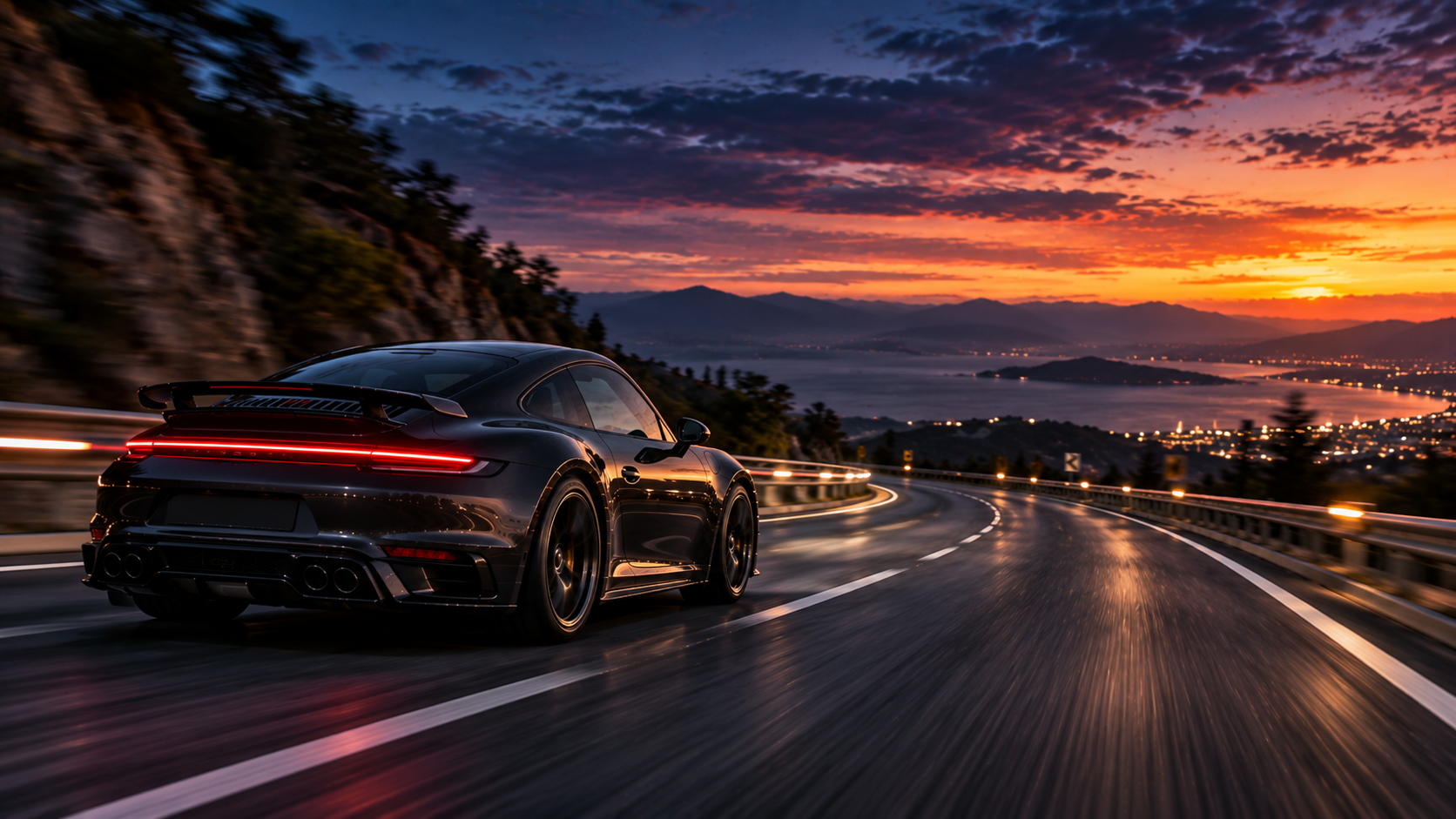
Speed is not always about the number on the dashboard.
Sometimes a road feels fast even when the car is moving at a completely ordinary pace. Other times, the same stretch of highway can feel calm, slow and almost weightless.
One of the things that can change that perception is music.
The right soundtrack can make the road feel more energetic, more cinematic or more expansive. A different rhythm can change the atmosphere inside the cabin and influence the way we experience distance, movement and time.
This is one reason electronic music can feel so natural on an open road. Its rhythm and repetition can create a strong connection between the movement of the car and the movement of the music.
Speed Is More Than a Number
When driving, speed is measured objectively. The vehicle is traveling at a specific number of miles or kilometers per hour.
But the feeling of speed is subjective.
A wide empty highway can make a car feel surprisingly relaxed even at higher speeds. A narrow road surrounded by trees can feel much faster even when the actual speed is lower.
Music becomes another layer of that perception.
A fast, energetic track can make the environment feel more active. A slower and more atmospheric track can make the same road feel spacious and unhurried.
The road has not changed.
The experience has.
Rhythm Creates Movement
Rhythm naturally creates a sense of movement.
When a consistent beat plays while a car is moving forward, the brain can begin connecting the two experiences. Road markings pass by, lights appear and disappear, and the music continues to move forward through its own pattern.
This relationship can make driving feel more immersive.
It is especially noticeable on long stretches of highway where the environment changes gradually rather than constantly.
The road provides the visual rhythm.
The music provides the sonic rhythm.
Together, they create a stronger sense of motion.
Tempo Can Change the Atmosphere
Tempo is another important part of the experience.
A track with a faster tempo can create a more energetic atmosphere. It may make a familiar road feel more dynamic and encourage the listener to perceive the journey as more active.
Slower music can have the opposite effect.
Ambient electronic music, slower progressive tracks or atmospheric compositions can make a long drive feel calmer and more spacious.
This does not mean music physically changes the speed of the vehicle. It changes the emotional context surrounding that speed.
Why Progressive Music Works Differently
Progressive music has an interesting relationship with driving because it does not always depend on dramatic changes.
Instead, elements can gradually appear, disappear and evolve.
A beat continues.
A melody slowly develops.
A bassline changes.
The atmosphere becomes deeper.
That gradual progression can work particularly well during a long journey because the music itself feels like it is traveling somewhere.
This is part of why progressive trance works so well for driving.
The music does not need to constantly demand attention. It can become part of the environment surrounding the driver.
The Same Road Can Feel Completely Different
Imagine driving the same highway twice.
The weather is similar. Traffic is similar. The car is the same.
But during the first drive, you listen to a quiet atmospheric track.
During the second, you listen to something energetic with a strong beat.
The physical journey may be almost identical, but the emotional experience can feel completely different.
That is one of the most interesting relationships between music and driving.
Music does not simply accompany the journey.
It can become part of the way the journey is remembered.
Night Driving Makes the Effect Stronger
At night, there is often less visual information competing for attention.
Streetlights pass rhythmically. Headlights appear in the distance. Reflections move across the windshield. The road becomes a series of illuminated shapes surrounded by darkness.
Add music to that environment and the experience can become highly cinematic.
This is why night drives feel different from ordinary daytime journeys.
The combination of darkness, artificial light, road movement and music can create a very distinctive atmosphere.
Music Can Make a Long Drive Feel Shorter
Long-distance driving can sometimes feel repetitive.
The scenery may remain similar for miles. The road continues forward, and the destination may still seem far away.
A good playlist can give the journey structure.
One track becomes another. A musical progression develops. The landscape changes gradually in the background.
Before long, the driver realizes that a significant amount of distance has passed.
This is one reason people often associate particular songs with road trips. The music becomes connected to a specific journey, location or period of life.
Choosing Music for Different Roads
There is no single perfect type of driving music.
The right choice depends on the road, the time of day and the atmosphere you want from the journey.
For an open highway, progressive electronic music can complement the sense of continuous movement.
For a quiet night drive, atmospheric tracks can create a more reflective environment.
For a long road trip, a playlist with gradual changes can prevent the soundtrack from becoming repetitive.
And for scenic roads, music with enough space between major elements can allow the surrounding environment to remain part of the experience.
When Music Becomes Part of the Car
There is also something unique about listening to music inside a moving car.
The cabin becomes a private listening environment.
Road noise becomes part of the background. The engine adds another layer of sound. The suspension responds to the surface beneath the wheels. Music comes through the speakers and fills the space around the driver.
The result is different from listening to the same track at home.
The environment is moving.
The sound is moving with it.
The Experience Matters More Than the Speed
Ultimately, music does not make a car objectively faster.
It can, however, change how movement feels.
A steady rhythm can emphasize forward motion. A gradual musical progression can complement a long highway. An atmospheric track can make a night drive feel more cinematic.
That is what makes the relationship between cars, roads and music so interesting.
The driving experience is not defined by the vehicle alone.
It is also shaped by the road, the surroundings, the time of day and the soundtrack playing inside the cabin.
And sometimes, the right song can make an ordinary stretch of asphalt feel like somewhere worth remembering.
Cars. Roads. Music.
At AutoWalkthrough, driving is more than simply getting from one destination to another.
It is about the atmosphere created somewhere between the starting point and the destination.
The car provides the movement.
The road provides the journey.
And music can provide the feeling.
Cars. Roads. Music. The Experience of Driving.