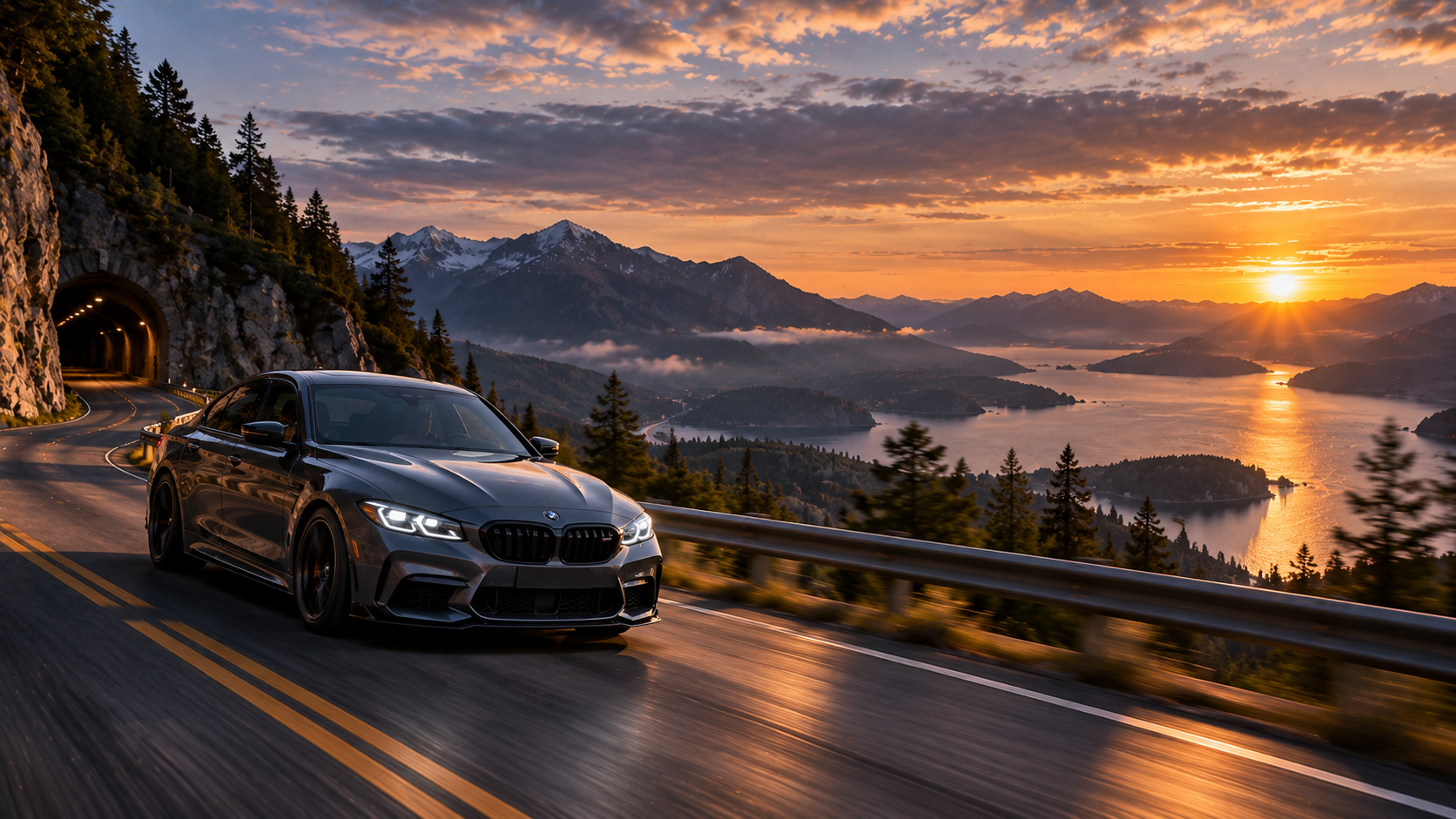
A long drive can be remembered for many reasons.
The road. The car. The weather. The destination.
But sometimes, what makes a journey memorable is the music playing between the first mile and the last.
A good driving playlist does more than fill silence. It can create rhythm, establish atmosphere and give a long journey its own identity.
The challenge is building a playlist that feels like a journey rather than a random collection of songs.
Here is how to approach it.
Start With the Journey, Not the Songs
Before choosing individual tracks, think about the journey itself.
Is it a two-hour highway drive?
A six-hour road trip?
A scenic mountain route?
Or a late-night drive through an unfamiliar city?
The environment should influence the soundtrack.
A relaxed coastal highway might suit atmospheric electronic music, while a more energetic road trip could benefit from stronger rhythms and faster transitions.
The playlist should feel connected to the road.
Think in Phases
One of the easiest ways to build a better driving playlist is to divide the journey into phases.
The beginning of the drive can feel different from the middle.
The middle can feel different from the final stretch.
For example:
- Departure: relaxed and atmospheric tracks
- Open road: stronger rhythm and forward momentum
- Deep journey: longer progressive tracks
- Final stretch: emotional or memorable tracks
- Arrival: calmer music that closes the journey
This creates a sense of progression.
Instead of simply listening to songs, you begin to experience a soundtrack that develops alongside the road.
Choose the Right Opening Track
The first song matters more than many people realize.
It establishes the mood of the drive.
A powerful opening track can immediately create energy, while a slower atmospheric track can make the beginning feel relaxed and cinematic.
For a long journey, the opening track does not necessarily need to be the most exciting song in the playlist.
Think of it as the opening scene of a movie.
It sets the atmosphere without revealing everything that comes later.
Let the Music Develop
One of the reasons progressive trance works so well for driving is its ability to develop gradually.
A track can begin with a simple rhythm and slowly introduce new layers.
The same principle can be applied to an entire playlist.
Start with simpler tracks.
Introduce more rhythm.
Increase the energy gradually.
Then allow the playlist to breathe again.
This creates a natural flow instead of making every track compete for attention.
Don’t Make Every Song High Energy
A common mistake when creating a road trip playlist is choosing only energetic songs.
That can become tiring after several hours.
A better playlist has contrast.
High-energy tracks can be followed by atmospheric or melodic tracks. Faster songs can give way to longer progressive compositions.
The changes create breathing room.
That contrast is especially important during long drives because the journey itself already provides continuous stimulation.
Use Longer Tracks When Appropriate
Short songs can work perfectly for city driving, but longer tracks can be particularly effective on highways.
A six- or seven-minute electronic track can stay with the same atmosphere long enough for the surrounding landscape to change.
Instead of constantly switching between songs, the music becomes part of the environment.
This can make the drive feel more continuous.
The road keeps moving.
The music keeps developing.
And the journey feels like one uninterrupted experience.
Think About Transitions
A playlist becomes much more immersive when the transitions between songs feel natural.
Pay attention to tempo, mood and intensity.
A bright energetic track followed immediately by a quiet ambient composition may feel abrupt.
But if the change happens gradually, the listener barely notices the transition.
This is particularly useful for electronic music, where similar rhythmic structures and atmospheric elements can make transitions feel seamless.
Build a Playlist Longer Than the Drive
If the journey is expected to take four hours, consider creating a playlist longer than four hours.
That gives the soundtrack room to breathe.
You do not need to worry about reaching the final song at exactly the same time as your destination.
A longer playlist also prevents repetition if the journey takes longer than expected.
For a major road trip, an eight- or ten-hour playlist can provide plenty of variety without requiring constant interaction.
Separate Day Driving From Night Driving
The same music does not always work equally well at every time of day.
Daytime driving often provides more visual information. There are landscapes, buildings, traffic and changing colors everywhere.
At night, the environment becomes darker and more focused.
Headlights, streetlights and reflections become part of the visual rhythm.
That is why a dedicated night drive playlist can be so effective.
Atmospheric electronic music, progressive trance and slower cinematic tracks can complement the darker environment.
As we explored in Why Night Drives Feel Different, darkness can change the entire character of a drive.
Match the Music to the Road
Different roads create different moods.
A wide interstate highway has a different character from a winding mountain road.
A coastal road feels different from a downtown boulevard.
The music can reflect those differences.
For open highways, continuous rhythmic music can emphasize distance and movement.
For scenic roads, atmospheric tracks can leave enough space for the landscape to remain part of the experience.
For city driving, shorter and more dynamic tracks may work better.
The goal is not to find objectively perfect music.
The goal is to find music that belongs to the journey.
Leave Room for Familiar Songs
A playlist does not have to contain only new discoveries.
Familiar songs can become powerful markers during a journey.
A particular track might later remind you of a highway, a sunset or a specific road trip.
That connection between music and memory is one of the most interesting parts of driving.
As we explored in why music can change the driving experience, the soundtrack can become part of how we remember the journey itself.
Don’t Overthink the Playlist
There is also a point where playlist building becomes too complicated.
You do not need to calculate every transition perfectly.
You do not need to create a perfect sequence of hundreds of songs.
Start with music you genuinely enjoy.
Then organize it around the mood of the journey.
Listen to the playlist once before the trip and remove anything that feels out of place.
After that, let the road do the rest.
The Best Driving Playlist Feels Like a Journey
A great playlist has a beginning, a middle and an end.
It creates movement without demanding constant attention.
It gives energetic moments space to exist alongside quieter ones.
And most importantly, it becomes connected to the road.
That is why building a driving playlist is different from simply making a playlist for a party or for listening at home.
The environment is constantly changing.
The car is moving.
The destination is getting closer.
The music becomes part of that progression.
Cars. Roads. Music.
At AutoWalkthrough, we believe the experience of driving exists somewhere between the machine, the road and the atmosphere surrounding it.
A car gives you the ability to move.
A road gives you somewhere to go.
Music gives the journey a feeling.
Put them together, and even an ordinary drive can become something worth remembering.
Cars. Roads. Music. The Experience of Driving.