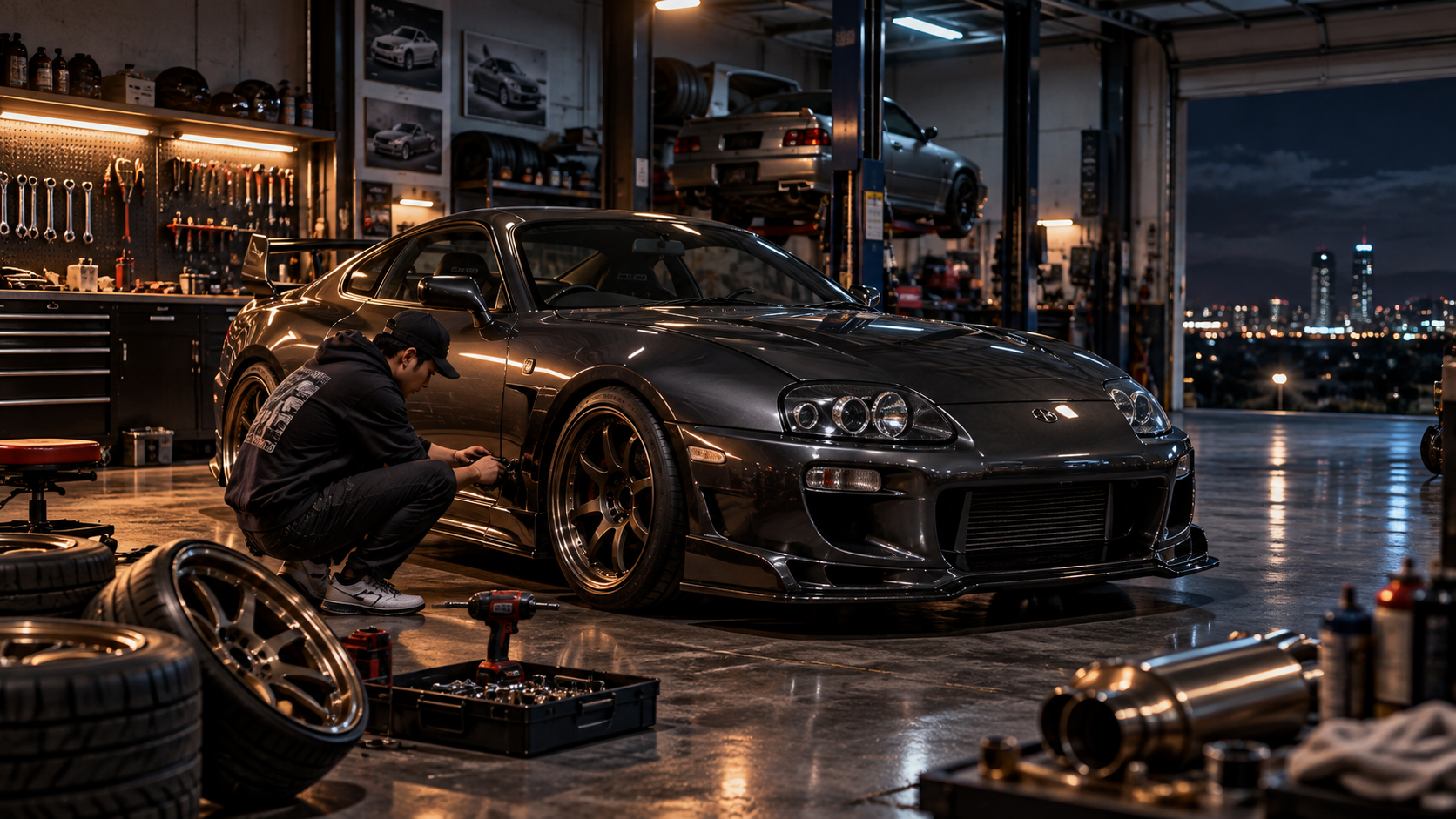
Most cars leave the factory with a clear purpose.
They are designed, engineered and tested to work for a wide range of drivers. The suspension has a particular balance. The wheels have a specific size. The interior follows a certain design philosophy.
Then the car reaches its owner.
And sometimes, the owner starts changing it.
A different set of wheels appears. The suspension is lowered. The exhaust changes. The interior receives new details. A spoiler is added. The sound system is upgraded. Sometimes the changes are barely visible. Sometimes the entire character of the car is transformed.
Why do people do this?
The answer goes far beyond performance.
Modification Is a Form of Personal Expression
A factory-built car is designed for a broad audience.
A modified car can be designed around one person.
That distinction explains much of the appeal.
One owner may want a clean, understated appearance. Another may want a more aggressive stance. Someone else may care almost entirely about driving performance.
There is no single definition of a modified car.
The choices reflect the person behind the wheel.
1. People Want Their Cars to Feel Personal
Cars are unusual possessions because we spend so much time inside them.
They take us to work, through cities, on road trips and sometimes across entire countries.
Over time, a car can become part of everyday life.
Changing something about it can make the vehicle feel more personal.
A steering wheel, wheel design, seat, suspension setup or audio system may seem insignificant to someone else.
To the owner, it can make the car feel more like their own.
2. Wheels Can Completely Change a Car
Few modifications have as much visual impact as wheels.
Changing the wheel design can alter the character of a vehicle immediately.
A classic multi-spoke design can make a car feel elegant. A lightweight motorsport-inspired wheel can create a more aggressive appearance. A simple factory-style wheel can preserve an understated look.
Wheel size also changes the visual proportions of the vehicle.
But appearance is only part of the equation.
Wheel width, tire selection and sidewall height can also influence how a car feels on the road.
That is why enthusiasts often spend considerable time choosing the right combination.
3. Suspension Changes the Relationship With the Road
Suspension modifications can range from subtle to extreme.
Some owners simply want to improve the ride or replace worn components.
Others want a lower ride height and sharper handling.
The important thing is that suspension changes affect more than appearance.
Spring rates, damping, ride height, alignment and tire characteristics all interact.
A modification that looks excellent can still create an unpleasant driving experience if the components are poorly matched.
That is why thoughtful modification is often about balance rather than simply adding the most aggressive parts possible.
4. Performance Modifications Create a Different Kind of Satisfaction
For some enthusiasts, modifying a car is primarily about performance.
Better brakes.
Improved tires.
Suspension upgrades.
Engine modifications.
Cooling improvements.
These changes can make the car more capable, but there is another benefit.
The owner becomes more familiar with how the vehicle works.
Understanding what each component does can make the car more interesting even when it is parked.
The modification process becomes part of the ownership experience.
5. The Build Process Can Be as Important as the Finished Car
Some modified cars take years to complete.
The owner finds a part.
Then another.
Something does not fit.
A problem appears.
A solution has to be found.
The car changes gradually.
This process creates a relationship between the owner and the machine that is difficult to achieve through simply purchasing a finished vehicle.
Every modification can represent a decision, a problem solved or a lesson learned.
The finished car therefore carries the history of its construction.
6. Not Every Modification Is About Being Faster
This is an important part of car culture.
Modified cars are often associated with performance, but many modifications have nothing to do with speed.
Interior lighting.
Custom upholstery.
Audio systems.
Storage solutions.
Exterior trim.
Roof racks.
Practical organizers.
Even small changes can make a car more useful or more enjoyable for its owner.
In many cases, customization is simply about making the vehicle better suited to someone’s lifestyle.
7. Different Car Cultures Have Different Ideas of Beauty
Car modification has developed differently in different parts of the world.
Some communities favor minimalist builds.
Others celebrate dramatic bodywork.
Some prioritize motorsport-inspired engineering.
Others focus on restoration and period-correct details.
There are also communities built around specific countries, manufacturers, models and generations.
This diversity is one of the reasons automotive culture remains so broad.
There is no single visual language for a modified car.
8. Older Cars Invite Modification
Older vehicles can be particularly attractive to people who enjoy customization.
They often have simpler mechanical systems and more space for experimentation.
Parts can sometimes be easier to understand and replace.
Owners may also feel less pressure to preserve every component exactly as it left the factory.
That creates an interesting balance between restoration and modification.
Some owners want originality.
Others want to update an older car while keeping its original character.
Both approaches can become meaningful forms of automotive culture.
9. Modification Can Keep a Car Interesting
Owning the same car for many years can eventually become routine.
Changing something can bring back the feeling of discovery.
A new set of wheels changes the appearance.
A suspension upgrade changes the way the car moves.
A new steering wheel changes the driver’s relationship with the interior.
Even a small improvement can make an old car feel interesting again.
This is one reason enthusiasts often continue developing the same car rather than replacing it.
10. The Owner Becomes Part of the Engineering Process
Factory engineers design a vehicle around thousands of requirements.
The owner has a much simpler job.
They decide what matters most to them.
Maybe comfort is the priority.
Maybe handling matters more.
Maybe the goal is simply to create a distinctive visual identity.
The modification process allows the owner to make those priorities visible.
The result may not appeal to everyone.
It does not have to.
The car was customized for a particular person.
11. Modification Creates Conversations
A completely standard car can attract attention.
A thoughtfully modified car can create questions.
What wheels are those?
What suspension are you using?
Why did you choose that setup?
Did you install it yourself?
How does it drive?
These conversations are part of the social side of car culture.
At a car meet, a modification can become an invitation to talk to someone you have never met.
That connection is one of the reasons car meets are about more than the cars.
12. Some Modifications Become Part of a Car’s Identity
Occasionally, a modification becomes so closely associated with a particular car that people can no longer imagine the vehicle without it.
A certain wheel style.
A particular body kit.
A distinctive exhaust.
A specific paint color.
A unique interior.
Over time, these details become part of the car’s identity.
That identity can become recognizable within an enthusiast community.
The car is no longer simply a particular model.
It becomes someone’s version of that model.
13. There Is a Difference Between Personal and Trend-Driven Builds
Automotive culture has trends just like every other creative community.
Certain wheel designs become popular.
Specific suspension setups become fashionable.
Particular visual styles spread quickly through social media.
There is nothing inherently wrong with following a trend.
But the most memorable builds often contain something personal.
A detail that reflects the owner’s taste.
A solution developed for a particular purpose.
A combination of parts that makes sense because of the owner’s experience.
That personal element gives a car individuality.
14. Good Modification Is About the Whole Car
The best modifications usually work together.
Wheels should make sense with the body.
Tires should match the suspension.
Brakes should support the performance of the vehicle.
The interior should fit the overall personality.
A powerful engine without appropriate cooling or braking creates an incomplete package.
A very low suspension setup may look dramatic but may not suit a car used for long road trips.
Modification works best when the owner understands how the individual changes affect the entire vehicle.
15. The Perfect Build Depends on the Owner
There is no universal perfect modification list.
A weekend track car has different requirements from a daily commuter.
A long-distance road trip car needs different priorities from a show car.
An older project car may require reliability improvements before cosmetic upgrades.
Context matters.
The best modification is usually the one that solves a real problem, improves a desired characteristic or makes the owner enjoy the car more.
Modification Is Part of the Ownership Story
A car can begin life as a mass-produced product.
After years of ownership, it can become something completely personal.
The changes may be expensive or inexpensive.
They may be visible or almost invisible.
They may improve performance, comfort, appearance or practicality.
But together, they tell a story about the person who owns the car.
That is what makes car modification such an important part of automotive culture.
Why People Keep Modifying the Same Car
There is a point where modification stops being about making a car objectively better.
It becomes about making it more yours.
You learn how the car behaves.
You discover what you like.
You change something.
You drive it again.
Then you notice another detail.
The process continues.
That cycle can last for years.
And sometimes the owner eventually realizes that the car has become much more valuable emotionally than it was when they first bought it.
The Car Becomes Part of the Person
This is perhaps the most interesting part of modification culture.
A factory car represents the decisions of a manufacturer.
A modified car represents a conversation between the manufacturer and the owner.
The original engineers created the foundation.
The owner decides where to take it next.
That does not make one approach universally better than another.
Some people prefer completely original cars.
Others enjoy changing almost everything.
Both are legitimate ways of experiencing automotive culture.
Why Modified Cars Matter to Automotive Culture
Car culture is not only about collecting vehicles or discussing specifications.
It is also about creativity.
It is about experimentation.
It is about learning.
It is about solving problems and sharing ideas.
Most importantly, it is about creating a relationship with a machine.
That is why people modify their cars.
Sometimes they want more performance.
Sometimes they want better comfort.
Sometimes they simply want something that looks different.
But underneath all of those reasons is the same idea:
The car becomes more personal when the owner leaves a little of themselves in it.
And that is where a machine becomes part of someone’s automotive story.