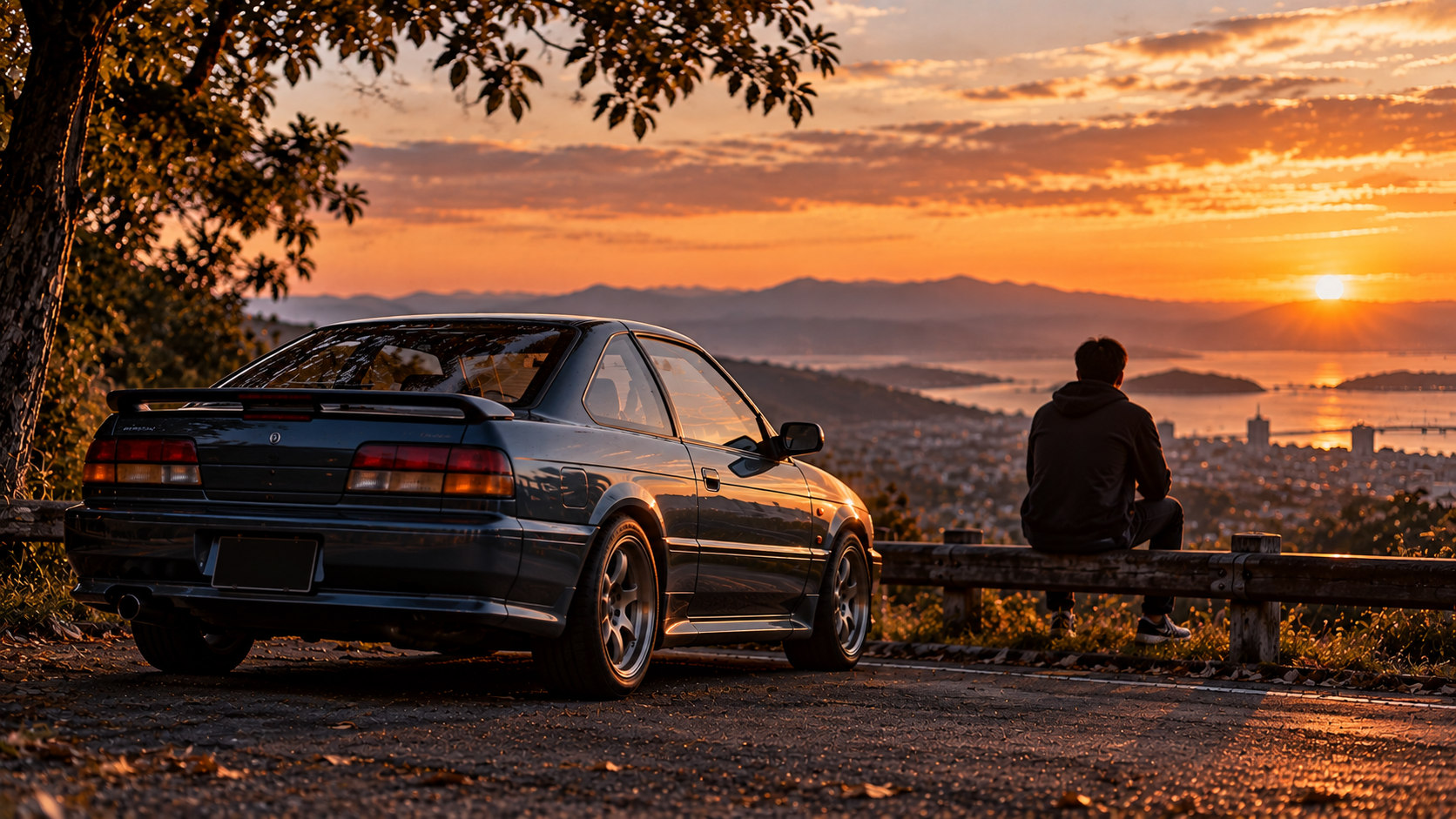
You have driven this road hundreds of times. You know where the surface changes, where the traffic usually slows, and which corner opens onto a view worth looking at. Normally, the journey requires very little thought.
Today, it feels different.
The car is still familiar. The steering wheel rests at the same angle, the seat holds the shape you recognize, and the engine makes the sounds you have heard for years. Nothing about the machine has suddenly changed.
But this may be the last time you drive it.
Perhaps you have sold it. Maybe a newer vehicle is waiting at home, or the cost of keeping the old one has finally become too difficult to justify. Whatever the reason, an ordinary journey has become something you want to remember.
The last drive in a car you loved is rarely just about the distance covered. It is about everything that came before it, and the knowledge that the next journey will belong to someone else.
Why an Ordinary Drive Suddenly Feels Different
Most journeys happen without ceremony. We start the engine, choose a destination, and follow a familiar route. Our attention moves between traffic, conversations, music, and the practical demands of getting somewhere.
When we know a car is about to leave our lives, the same routine can become unusually vivid.
You might notice the way the engine settles after starting. The familiar resistance of the gear lever, the texture of the steering wheel, or the sound of the tires on a particular stretch of road suddenly seems worth paying attention to.
These details were always there. You simply had no reason to think about them before.
Knowing that an experience is ending can change how we experience the present moment. Instead of treating the drive as another task, we begin noticing the things we are about to lose access to.
It does not mean every final journey must be dramatic. Sometimes the most meaningful drive is a quiet trip through familiar streets, with no destination beyond the desire to spend a little more time behind the wheel.
The Small Details You Will Miss
When people talk about the cars they loved, they often remember the details that would never make it into a sales advertisement.
Maybe the driver’s seat had a worn patch in exactly the right place. Perhaps the steering wheel had become smooth from years of use, or the dashboard made a tiny noise over rough pavement. You knew how the door needed to be closed, how the engine behaved on a cold morning, and where the controls were without looking.
These details formed a kind of personal map of the vehicle.
A replacement car might be quieter, more comfortable, and considerably more advanced. Yet it will take time before its interior feels equally familiar. The old car’s quirks were part of the daily experience, and even the minor annoyances can become strangely noticeable when you know they are about to disappear.
You may not miss every fault. You probably will not miss every repair bill. But you might miss the way the car felt like yours without requiring any explanation.
That familiarity is difficult to measure, and it is one reason some vehicles remain memorable long after their owners have moved on.
Every Car Carries a Collection of Journeys
A car’s history is more than the number displayed on its odometer. For the person who owns it, that distance represents a collection of experiences.
There were early-morning departures, late-night drives home, unexpected detours, and trips that became stories told years later. There may have been journeys with friends, visits to family, difficult commutes, or long stretches of road when the car provided a welcome space to think.
Some of those experiences were important at the time. Others seemed completely ordinary until years had passed.
The car connected them all. It was present through changes in work, relationships, routines, and personal circumstances. Even if it was never an especially rare or valuable model, it became associated with a period of life that cannot be repeated in exactly the same way.
This is why a photograph of an old car can bring back more than its appearance. It can remind someone of the house they lived in, the people who travelled with them, and the person they were when they first turned the key.
In The Cars We Remember Long After We Sell Them, we explored how vehicles become attached to our memories. The final drive is one moment when that connection becomes especially clear.
Why Saying Goodbye Can Feel Surprisingly Difficult
Selling a car is usually a practical transaction. You agree on a price, prepare the paperwork, hand over the keys, and move on to the next vehicle.
Yet the emotional side of the decision can be harder to explain.
You may have spent years maintaining the car, learning its habits, and making decisions about how to look after it. Perhaps you repaired it when replacing it would have been easier, or saved for months before buying it in the first place.
Even if the car is not worth much in the market, the time and attention you invested in it can make the goodbye feel personal.
There is also the simple fact that ownership gives you a sense of continuity. You know the car’s history, recognize its sounds, and understand how it behaves. When it leaves, that familiar part of your routine disappears.
Feeling sad about the change does not mean selling it was the wrong decision. You can know that a replacement is more practical and still appreciate what the old car meant to you.
Sometimes two things can be true at once: it is time to move on, and you are going to miss it.
The Final Route Does Not Need to Be Special
It is tempting to plan an elaborate farewell drive through spectacular scenery. For some owners, that is exactly the right way to mark the occasion. A favorite coastal road, a quiet stretch of countryside, or a route connected to an important memory can provide a meaningful setting.
But a special route is not essential.
The road you choose might be the one you take to work, the loop around your neighborhood, or the familiar way home from a place you have visited for years. What makes it meaningful is the connection you already have with it.
You do not need to push the car hard or try to recreate every memorable journey. In fact, driving gently and paying attention to the experience may be more satisfying than attempting to make the final trip extraordinary.
Keep the journey safe and legal. If you want photographs, stop somewhere appropriate rather than handling a camera while driving. The goal is to remember the car, not to turn the goodbye into a risky event.
Sometimes, simply taking the longer route home is enough.
The Soundtrack to a Last Journey
Music can make a familiar drive feel different. A song associated with a particular period of life can bring back memories before you have even reached the chorus.
On a final drive, the right soundtrack might be a playlist you have played for years. It could be a track you first discovered while driving the car, or music that reminds you of the people and places connected to it.
Other drivers may prefer no music at all. They might want to hear the engine, the tires, and the familiar sounds of the cabin without anything competing for attention.
There is no correct choice. The important thing is allowing the journey to feel natural rather than trying to manufacture a perfect cinematic moment.
For some people, music becomes part of the memory. Years later, hearing the same track may bring back the image of that particular dashboard, the light through the windshield, and the feeling of knowing the car would soon be gone.
Our article Why Music Makes Driving Feel Different explores how sound and atmosphere become part of the driving experience.
Take a Few Photographs, but Do Not Spend the Whole Drive Taking Them
Photographs are a simple way to preserve a car’s appearance before it leaves. A few well-chosen images can capture details that might otherwise fade from memory.
You could photograph the exterior from an angle you always liked, the dashboard, the driver’s seat, the wheels, or a small detail that made the car recognizable to you. If the car has been part of your life for many years, consider taking one final photograph in a place associated with it.
You do not need a professional camera or a complicated setup. Natural light and a location that means something to you can be enough.
It is also worth keeping records that have practical value, such as maintenance history and service documents, especially if they need to be passed to the next owner.
But try not to spend the entire farewell looking at a screen. The photographs are there to preserve the experience, not replace it.
Take a few pictures, put the camera away, and enjoy the remaining time with the car.
Letting Someone Else Take the Keys
The handover can be the most difficult part. Until that moment, the car is still yours. You can start it whenever you want, sit in the driver’s seat, or take one more trip around the block.
Once the keys change hands, the relationship becomes different.
The next owner may appreciate the car for completely different reasons. They might admire its design, want to restore it, or simply need dependable transportation. They will create their own routines and memories, most of which you will never see.
That can feel strange, especially if you have spent years knowing the car intimately.
But the vehicle does not need to remain yours for its story to continue. Another person may repair something you never managed to fix, take it somewhere you never visited, or preserve it for years to come.
If you have cared for the car responsibly, handing it over can also be a satisfying conclusion to your time as its owner. You are passing along something that has served you, rather than simply abandoning a chapter of your life.
You Can Miss a Car Without Wanting It Back
After selling a beloved car, some owners find themselves searching for the same model online. They look at listings, watch videos, or pause when an identical vehicle passes on the road.
That response is understandable. Familiar shapes and sounds can bring back strong memories, especially when the car represents an important period of life.
But nostalgia does not always mean you should buy another one.
You may miss the experience without wanting the responsibilities that came with it. The car might have required more maintenance than you can manage now, or your circumstances may have changed. A different vehicle may suit your current life much better.
It is possible to appreciate an old car while recognizing that the right time to own it has passed.
The memories remain yours. They do not depend on having another example parked outside.
In some cases, the best way to remember a car is to leave the past where it belongs and enjoy whatever comes next.
What the Last Drive Teaches Us About Cars
Cars are often evaluated through measurable qualities: price, performance, efficiency, reliability, and equipment. These factors matter, especially when making a purchase or deciding whether to keep a vehicle.
But a final drive reveals another side of ownership.
A car can become meaningful through repeated use, familiar sensations, and the experiences that happen while it is carrying us from one place to another. Its significance may have little relationship to its market value or reputation among enthusiasts.
That is why an ordinary family sedan can be just as difficult to say goodbye to as an expensive sports car. The machine itself is only part of the story. The rest comes from the life that happened around it.
Perhaps this is also why some imperfect cars remain so memorable. Their faults, sounds, and familiar controls become intertwined with the journeys that defined our time with them.
We explored that connection in Why We Get Attached to Cars That Aren’t Perfect. Sometimes, what makes a car important is not how close it comes to perfection, but how much it means to the person who drives it.
When the Journey Ends
Eventually, the road ends and the engine stops. You step out, close the door, and take one last look at a car that has been part of your life.
There may be no dramatic moment. No music swelling in the background, no perfect sunset, and no final realization that explains everything.
It might simply be a quiet driveway and a set of keys waiting to be handed over.
That is enough.
The car carried you through its share of ordinary days and memorable journeys. It was there when you needed transportation, when you wanted to drive without much of a reason, and when a familiar road provided a little space to think.
Now it is time for someone else to take it forward.
You can leave knowing that the experience mattered, even if the vehicle itself will eventually change, wear out, or disappear from the road. The car’s future may no longer be yours to decide, but the memories belong to you.
And long after the keys have changed hands, you may still remember that final journey: the familiar road, the sound of the engine, the light on the dashboard, and the feeling of driving a car you knew by heart.
At AutoWalkthrough, we believe that is part of what makes driving meaningful. Cars are not only machines that take us somewhere. Sometimes, they become part of the story we carry with us long after the journey is over.